E-Tribe
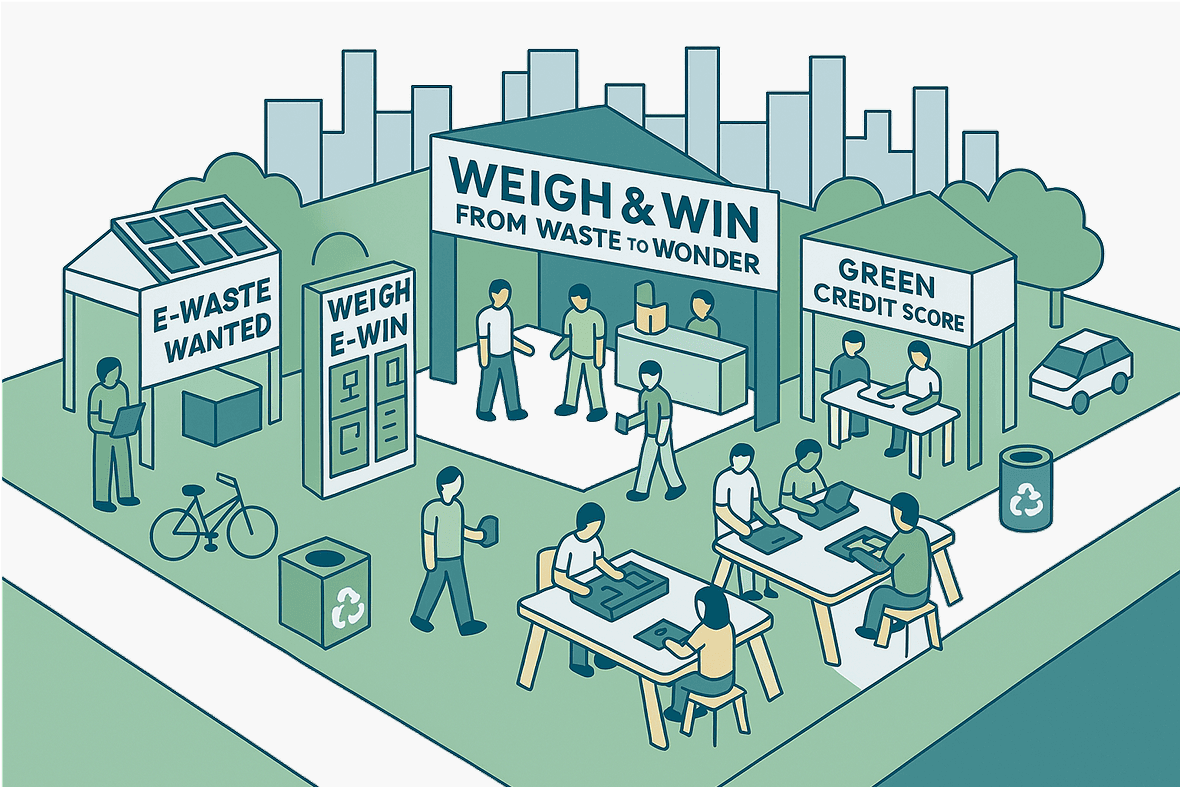
A Behavioural Service Ecosystem for Sustainable Urban E-Waste Management
The Strategic Gap
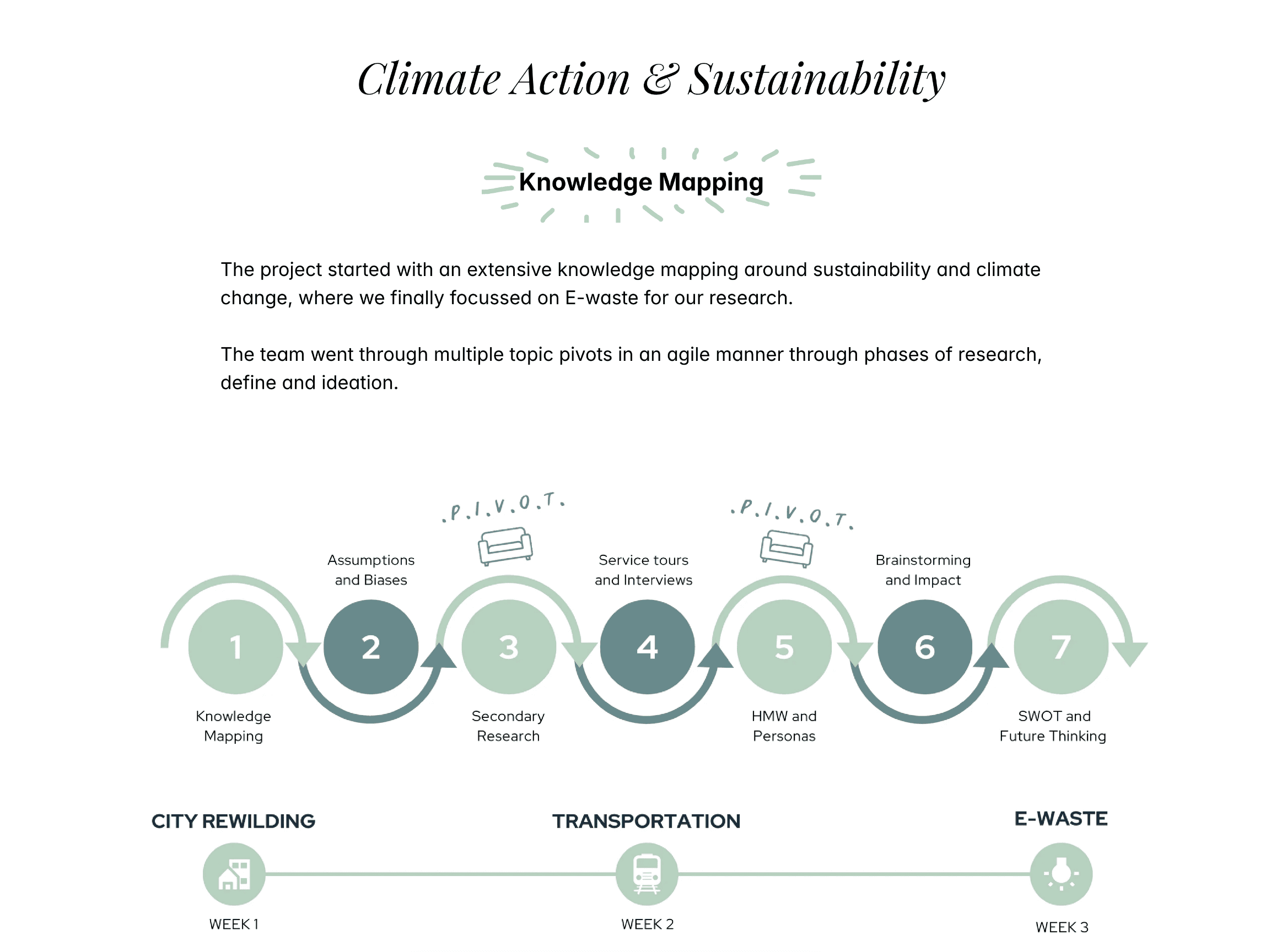
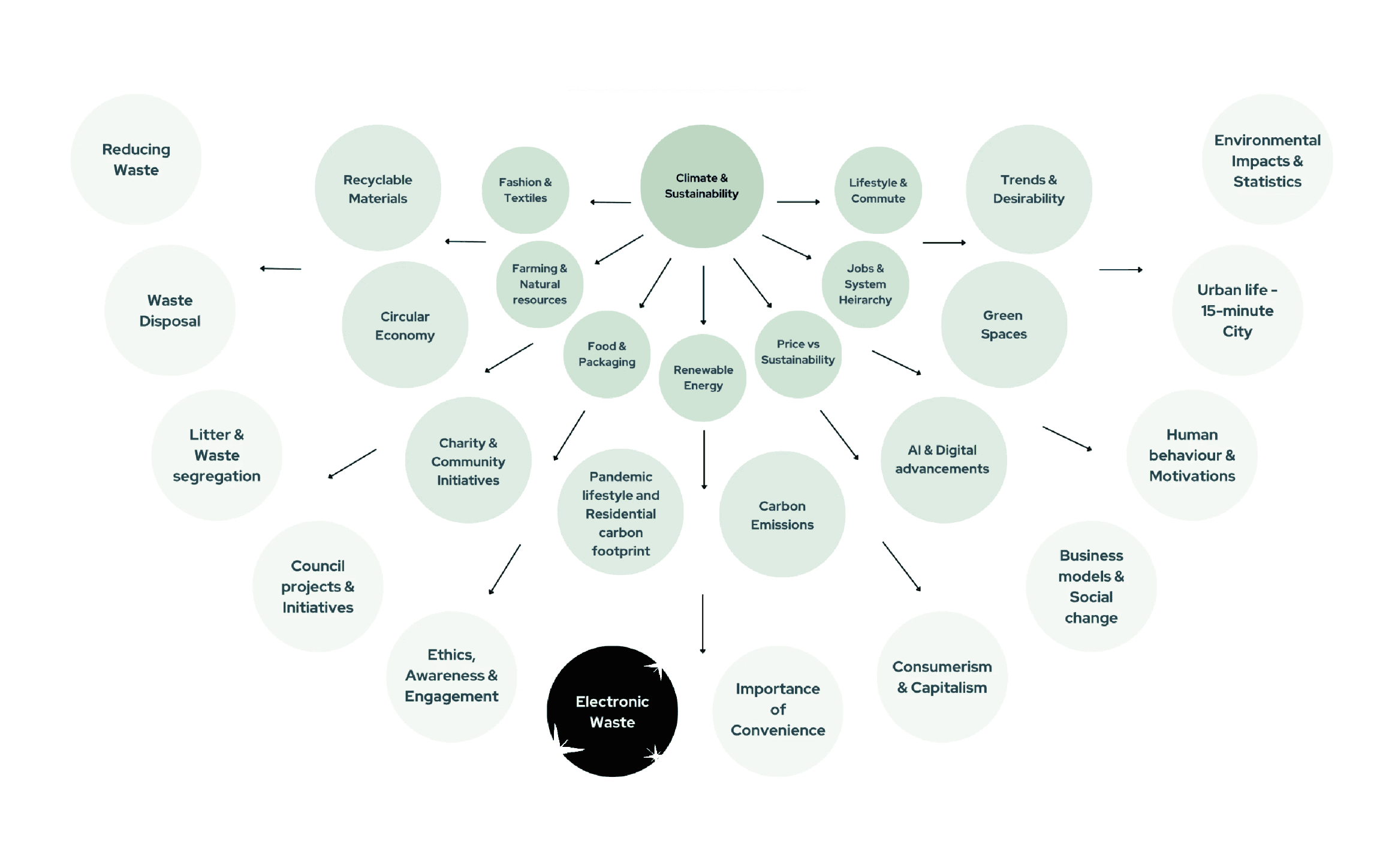
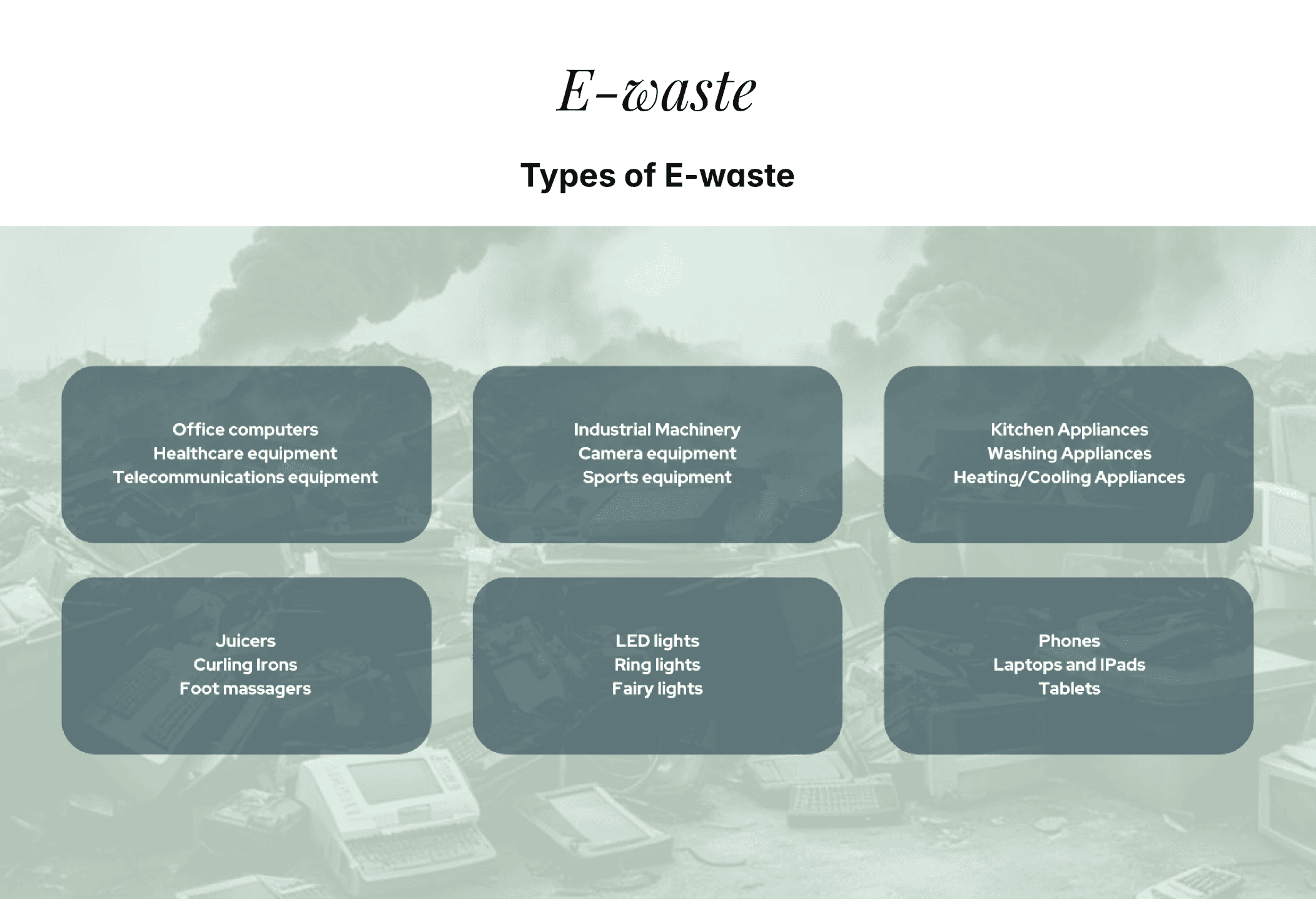
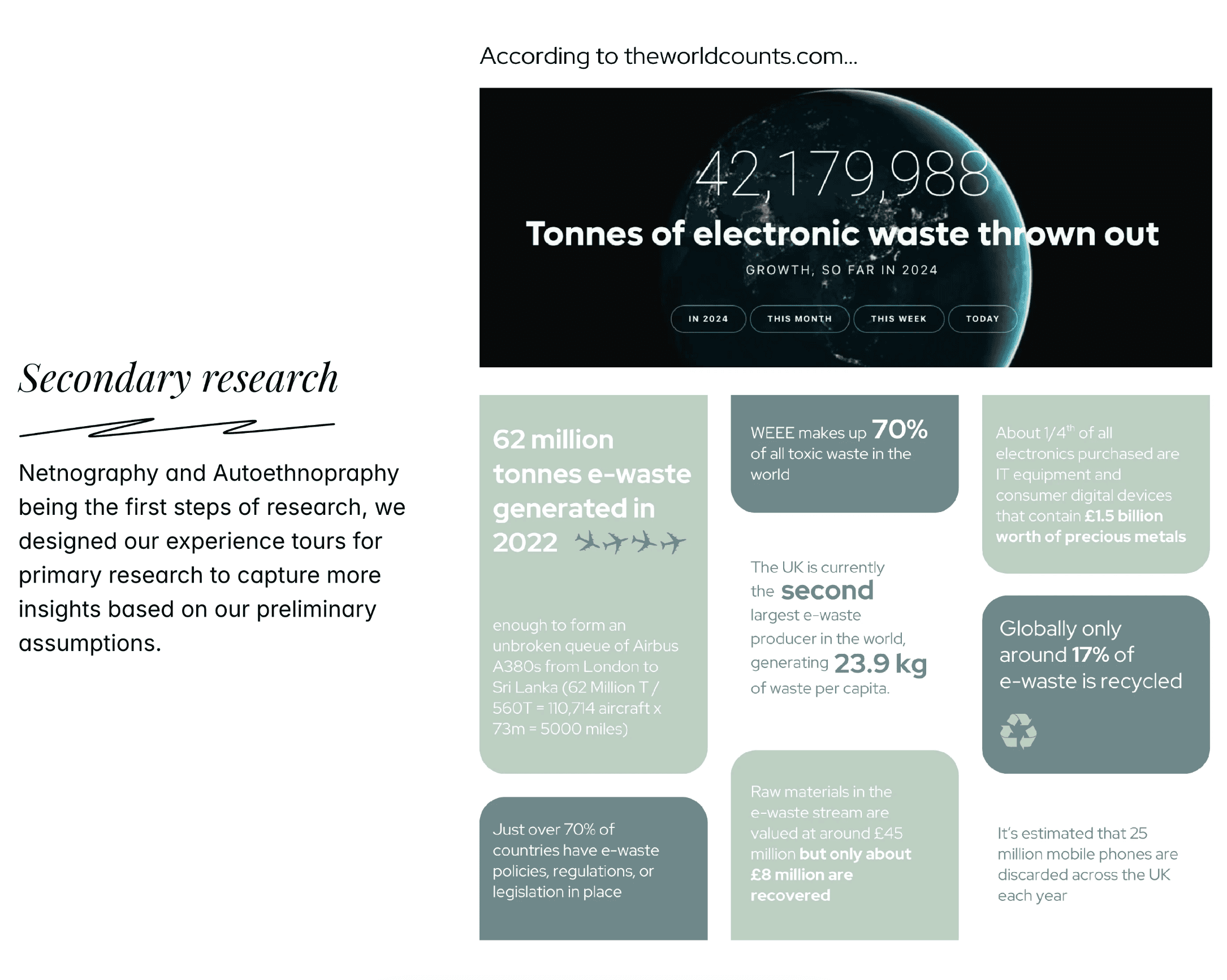
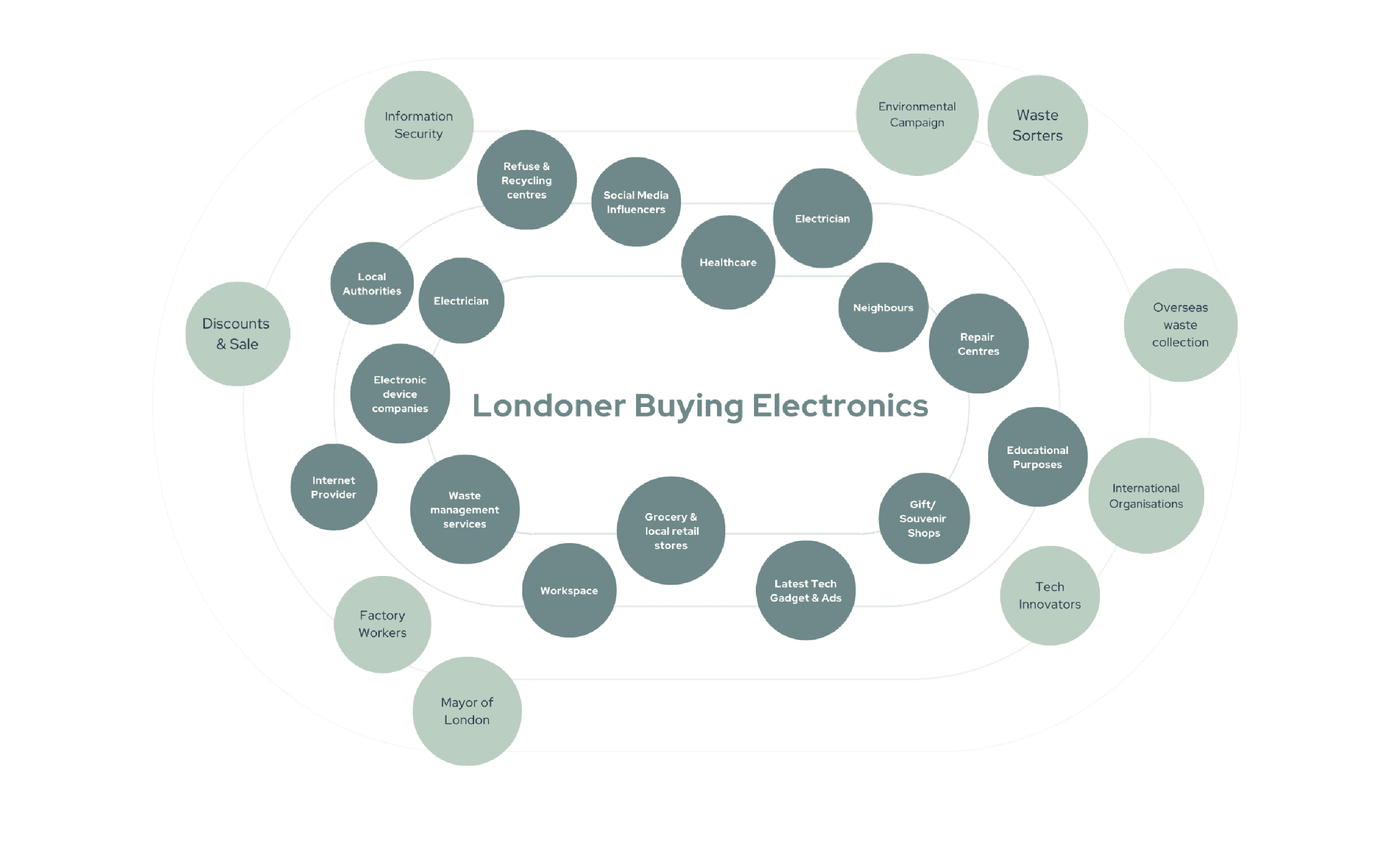
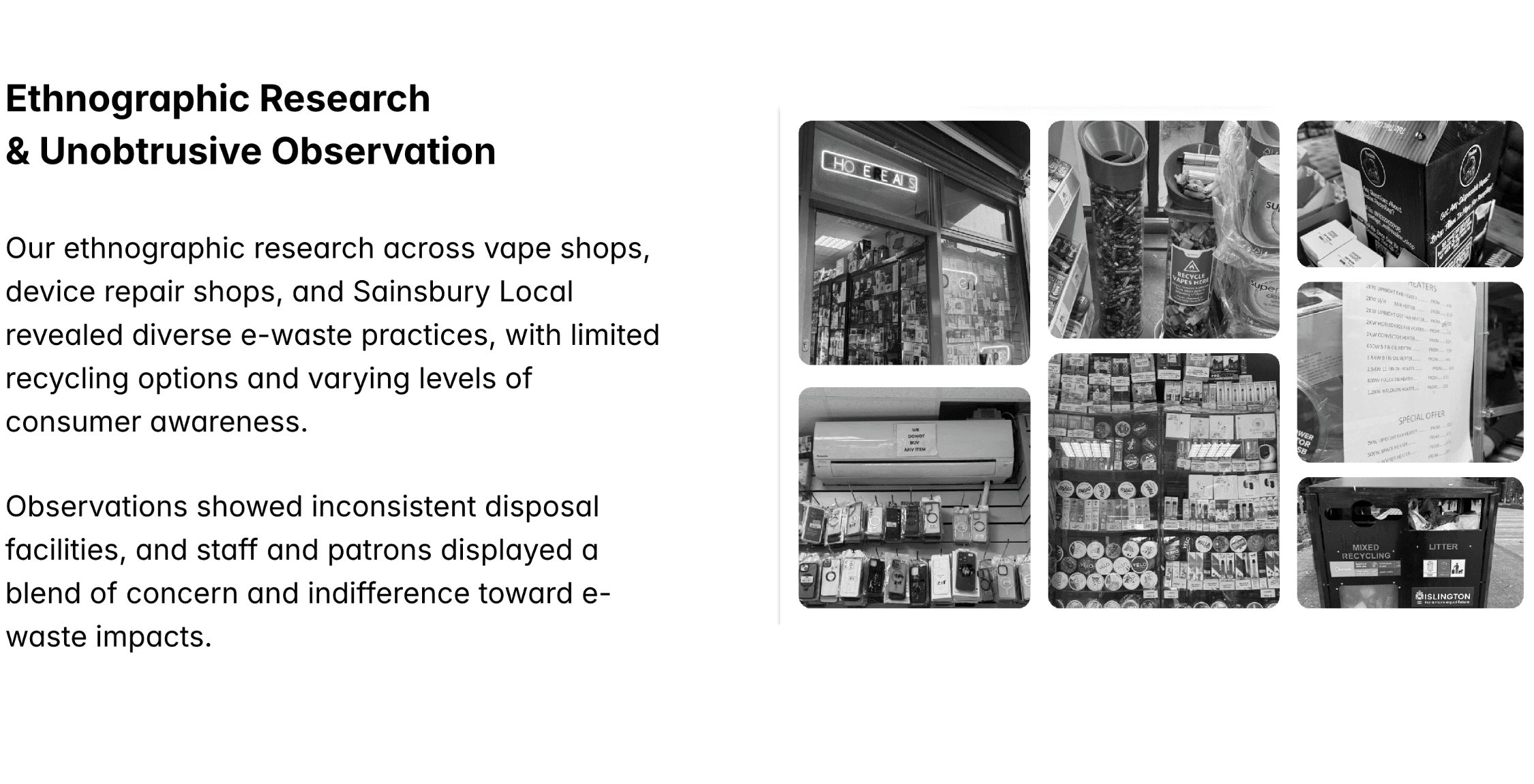
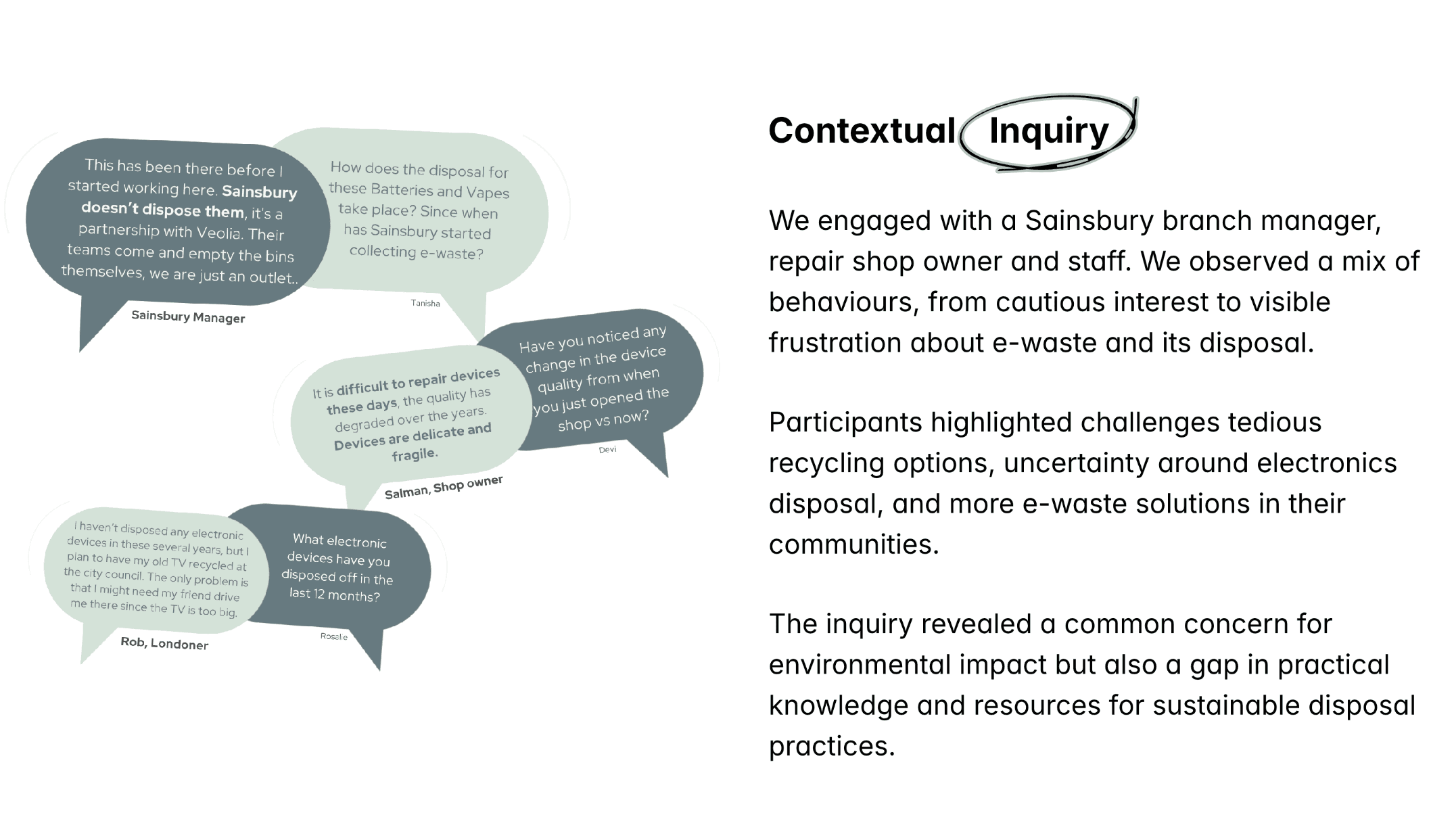
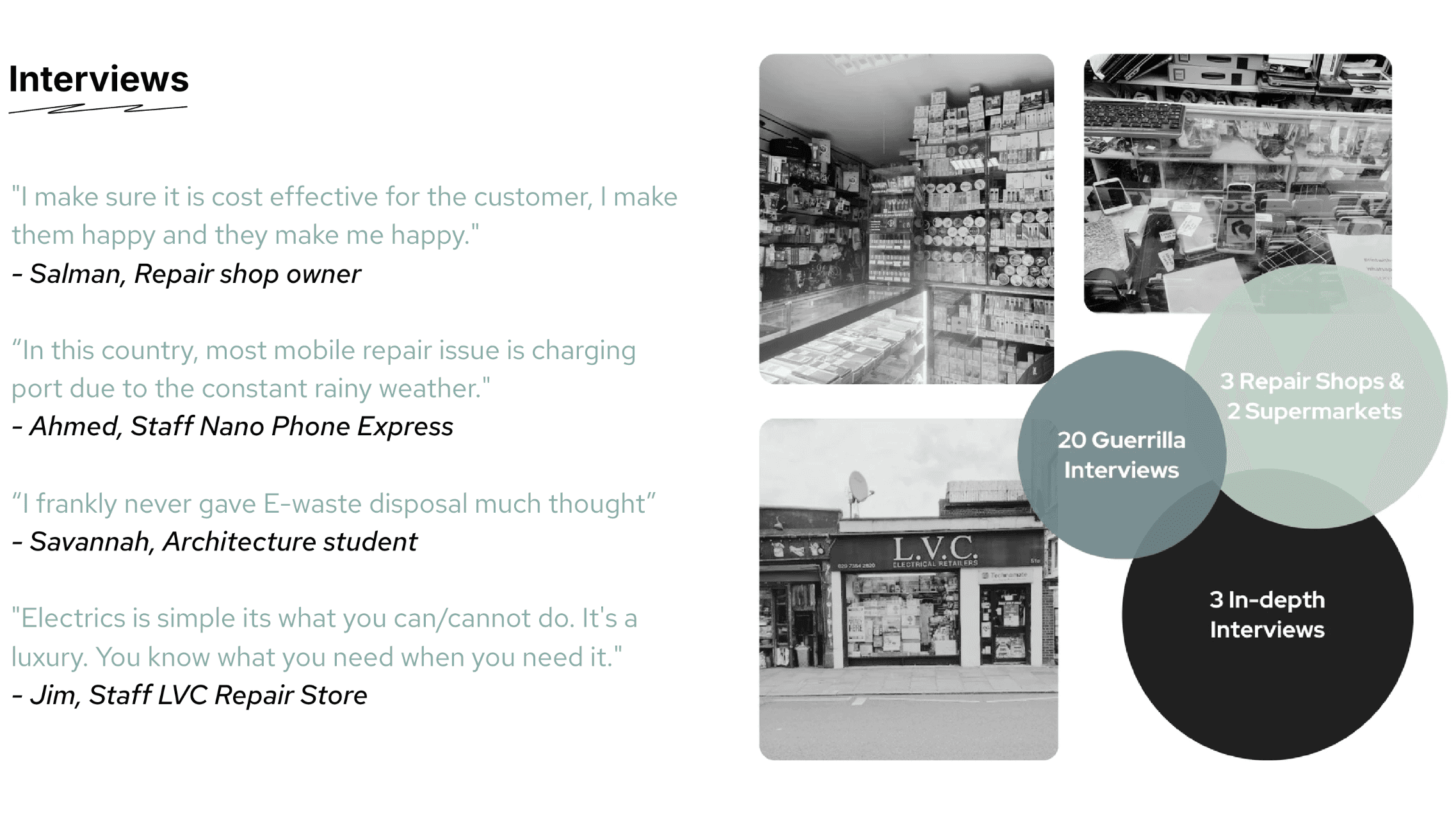
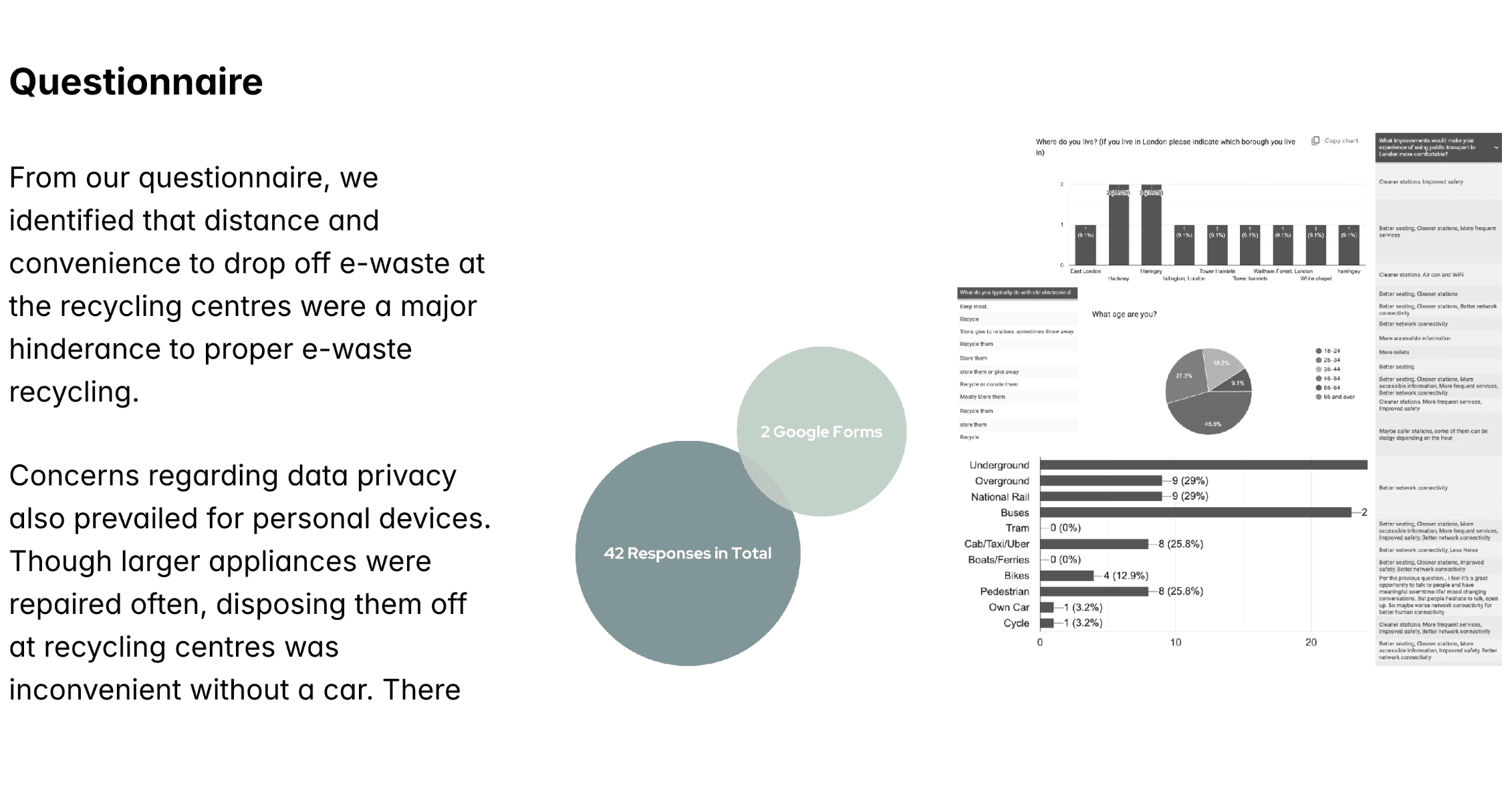
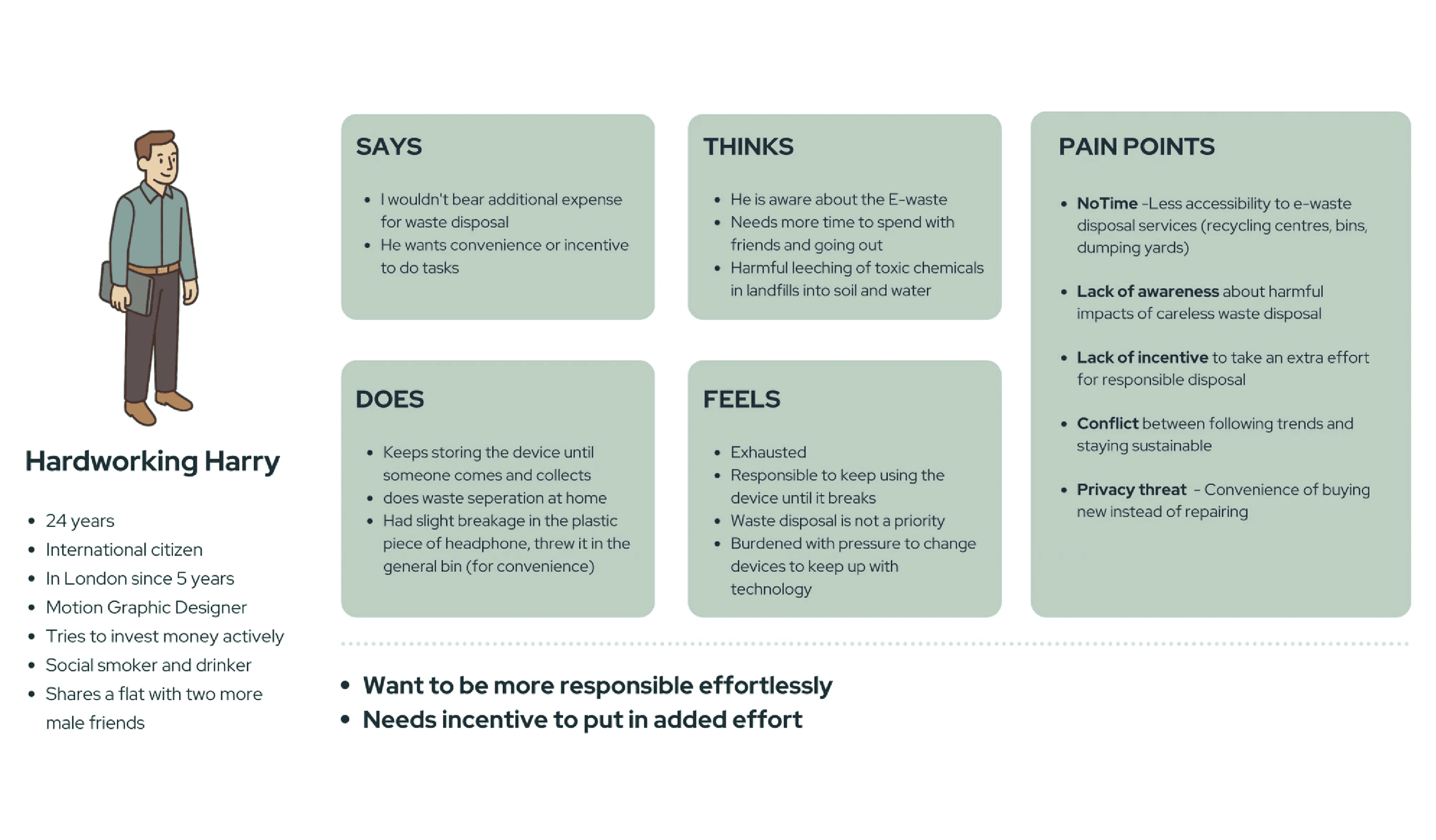
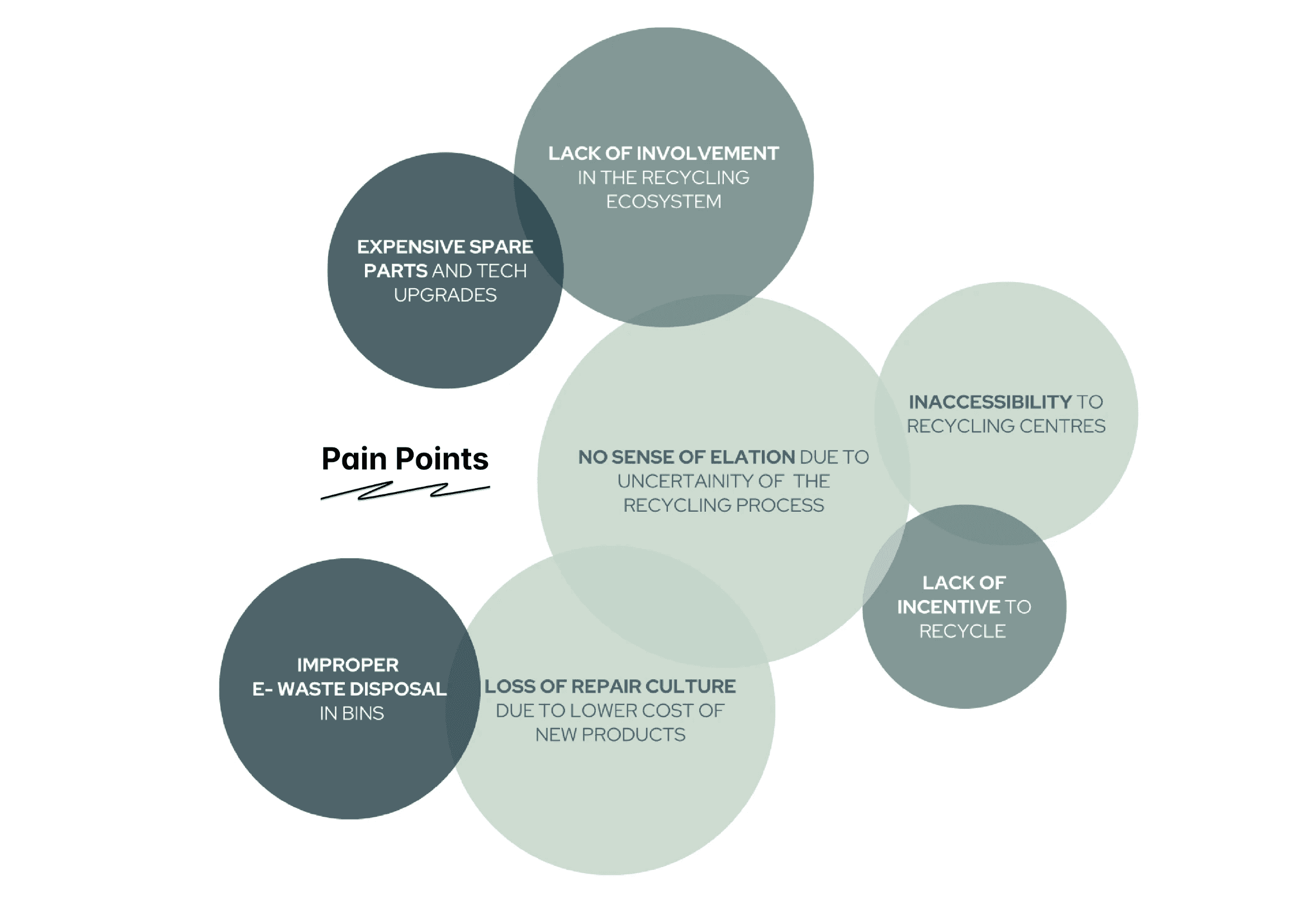
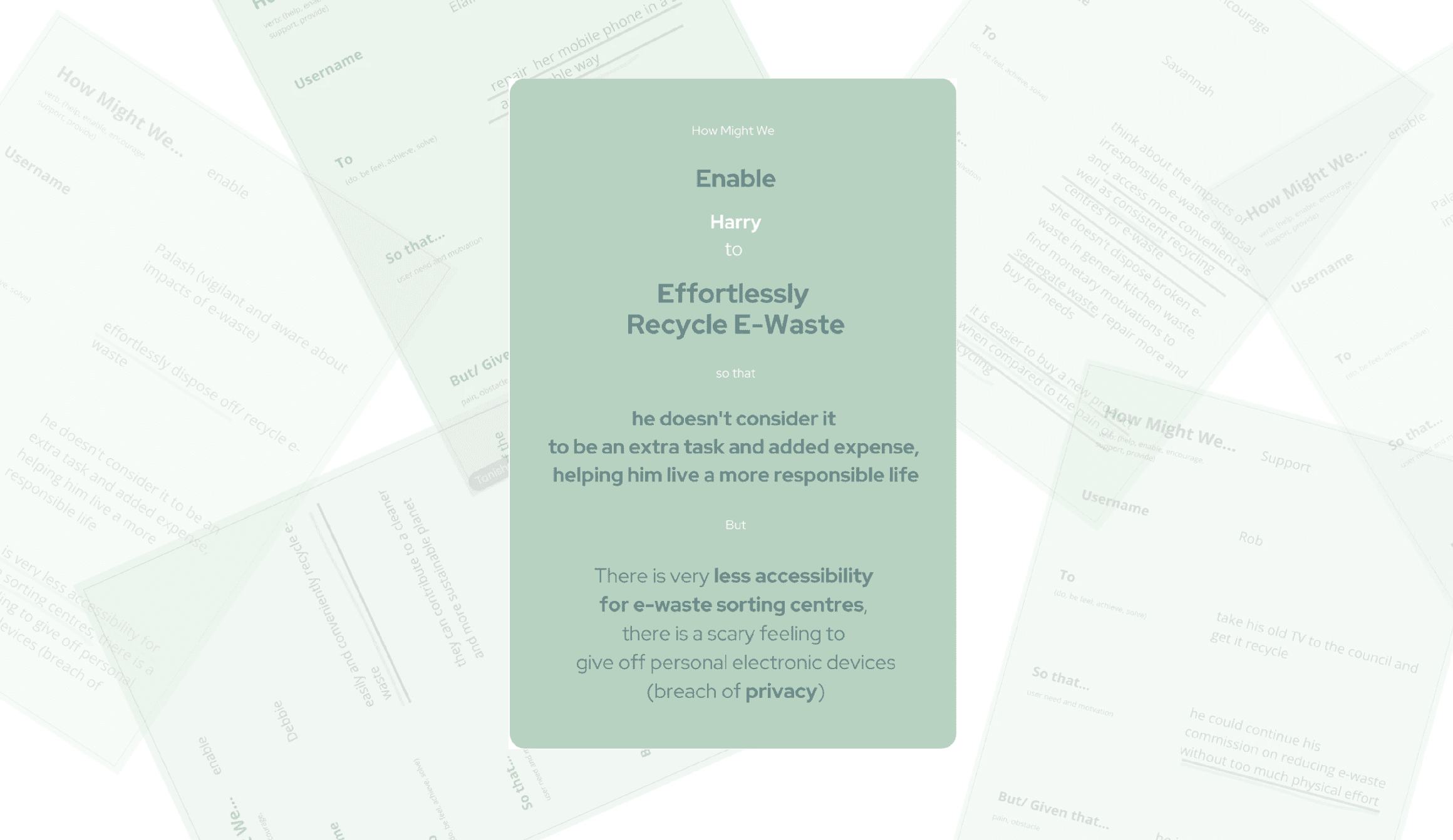
E-waste is the fastest-growing waste stream in urban environments, yet management systems remain fragmented and opaque. Our research in London revealed a critical behavioral barrier: residents hoard devices not out of laziness, but due to low trust in recycling systems and a lack of incentives. The challenge was to design a service that doesn't just collect waste, but actively rebuilds trust and closes the loop on product lifecycles.
A Three-Tiered Ecosystem
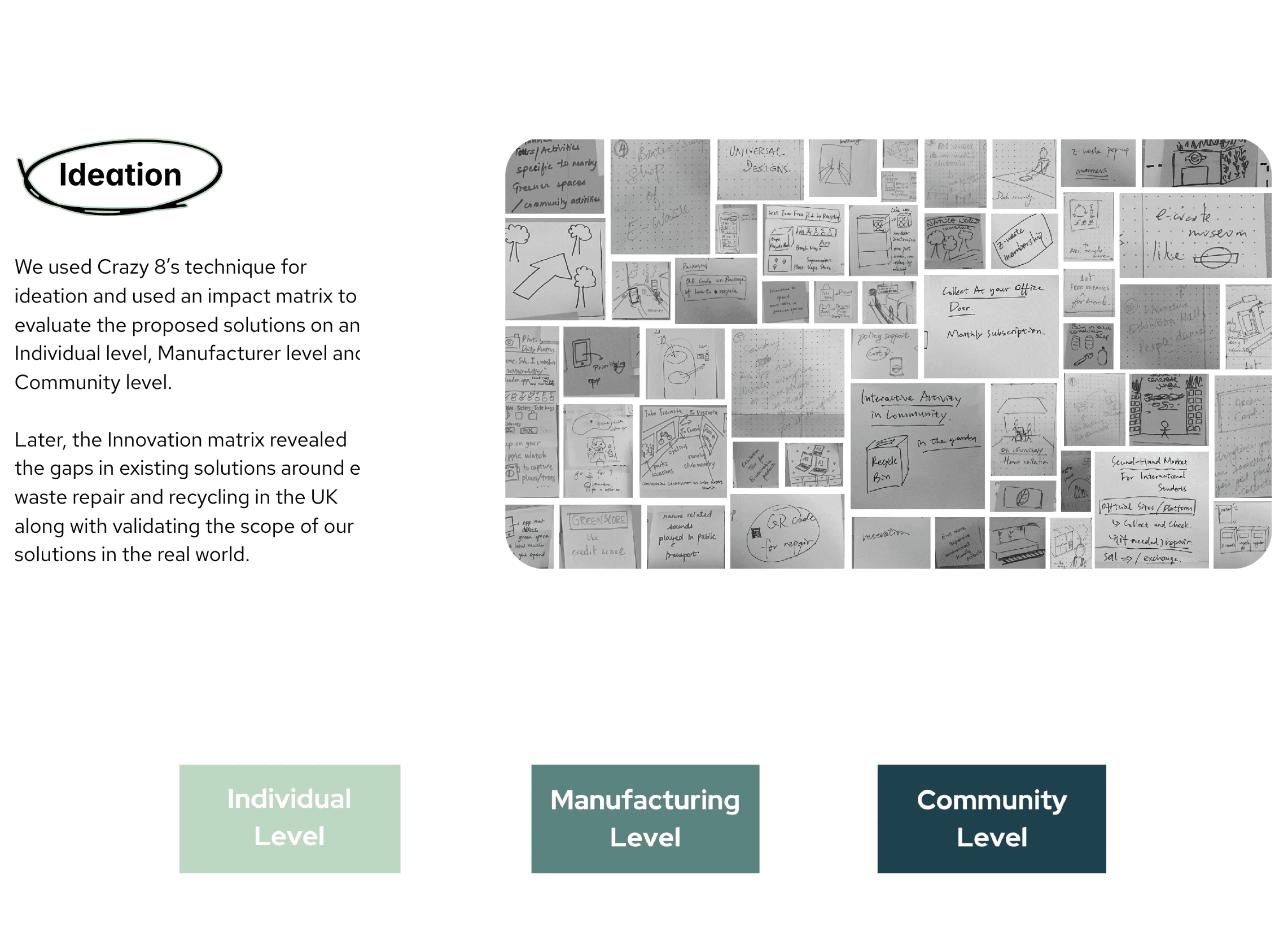
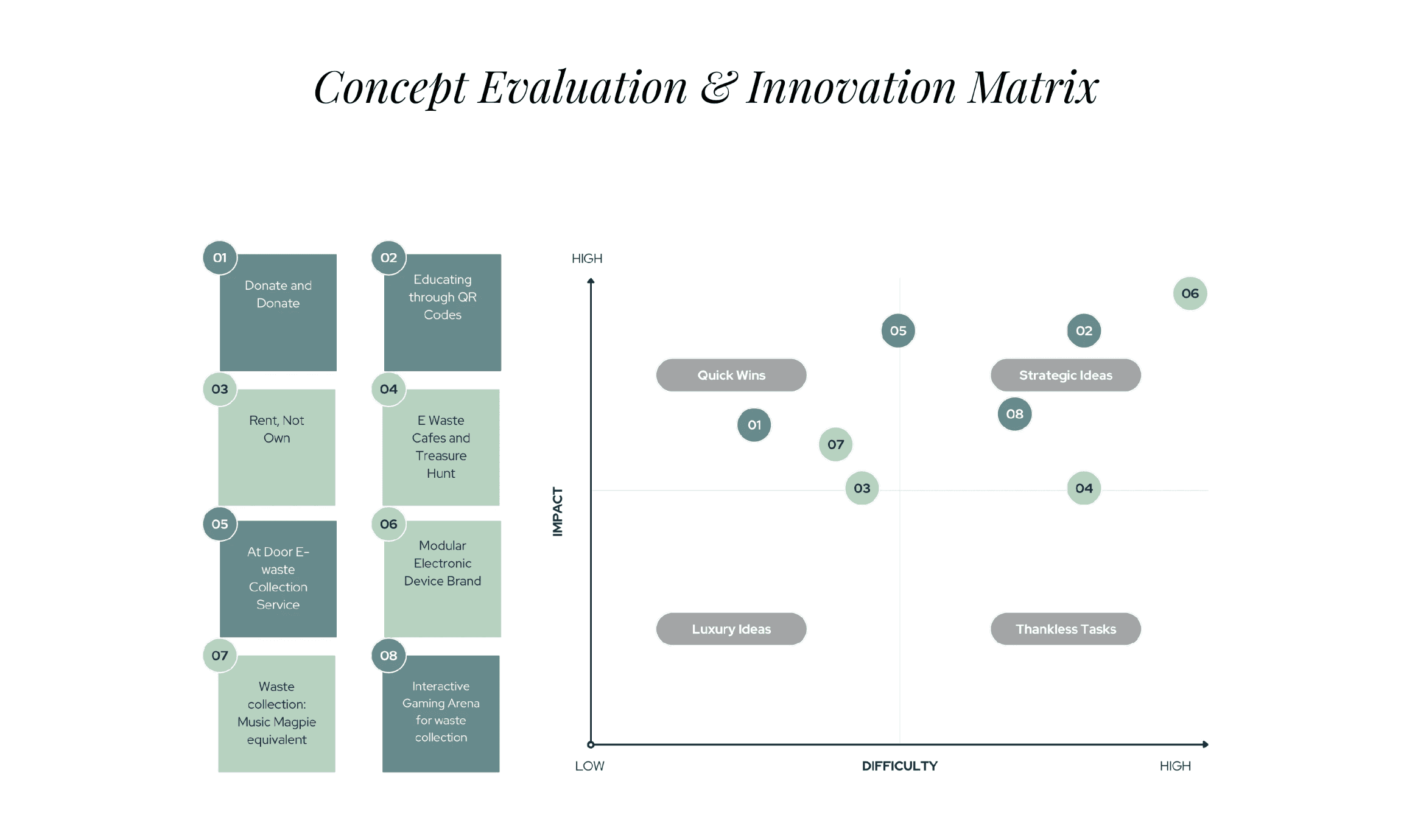
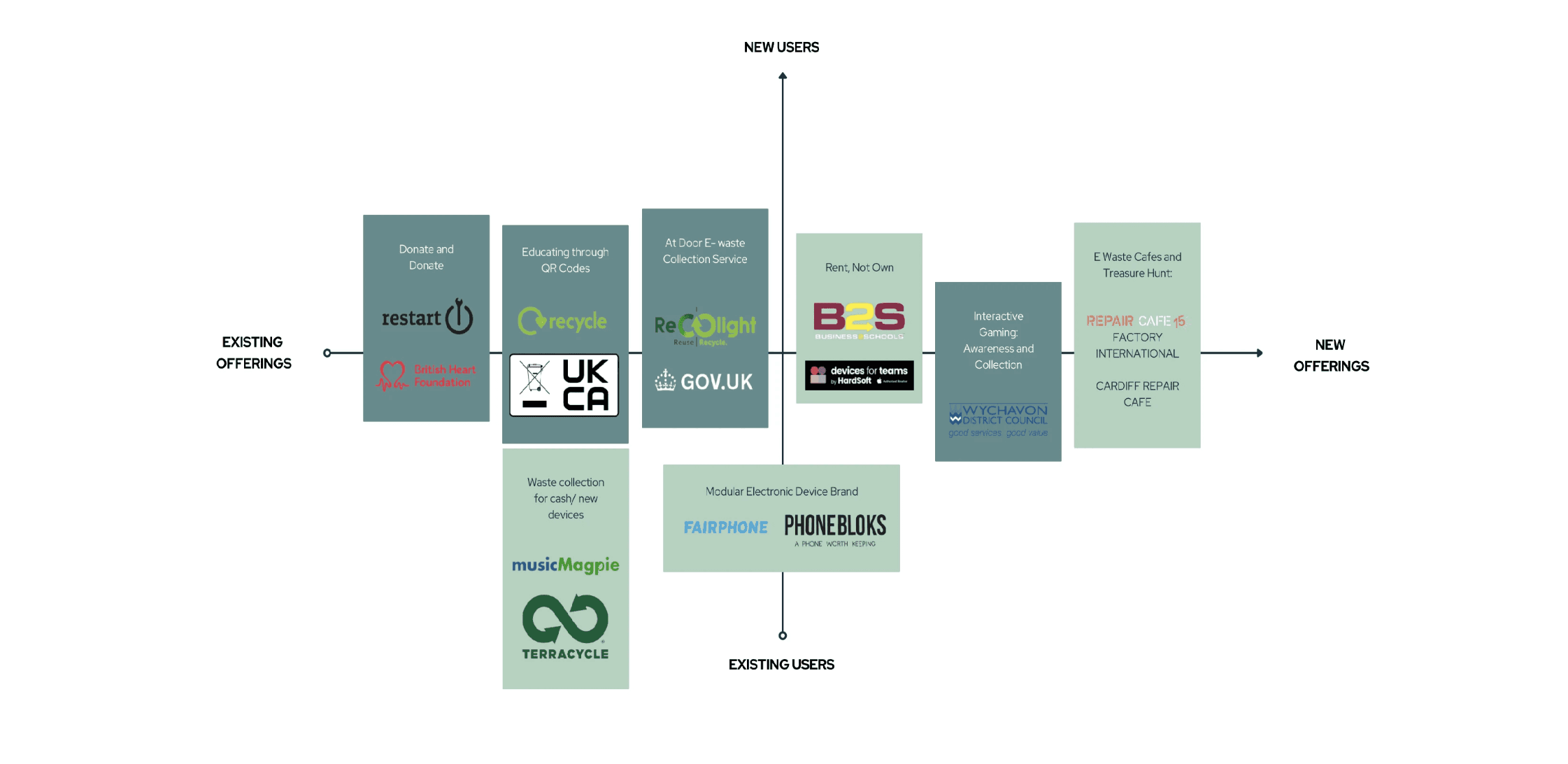
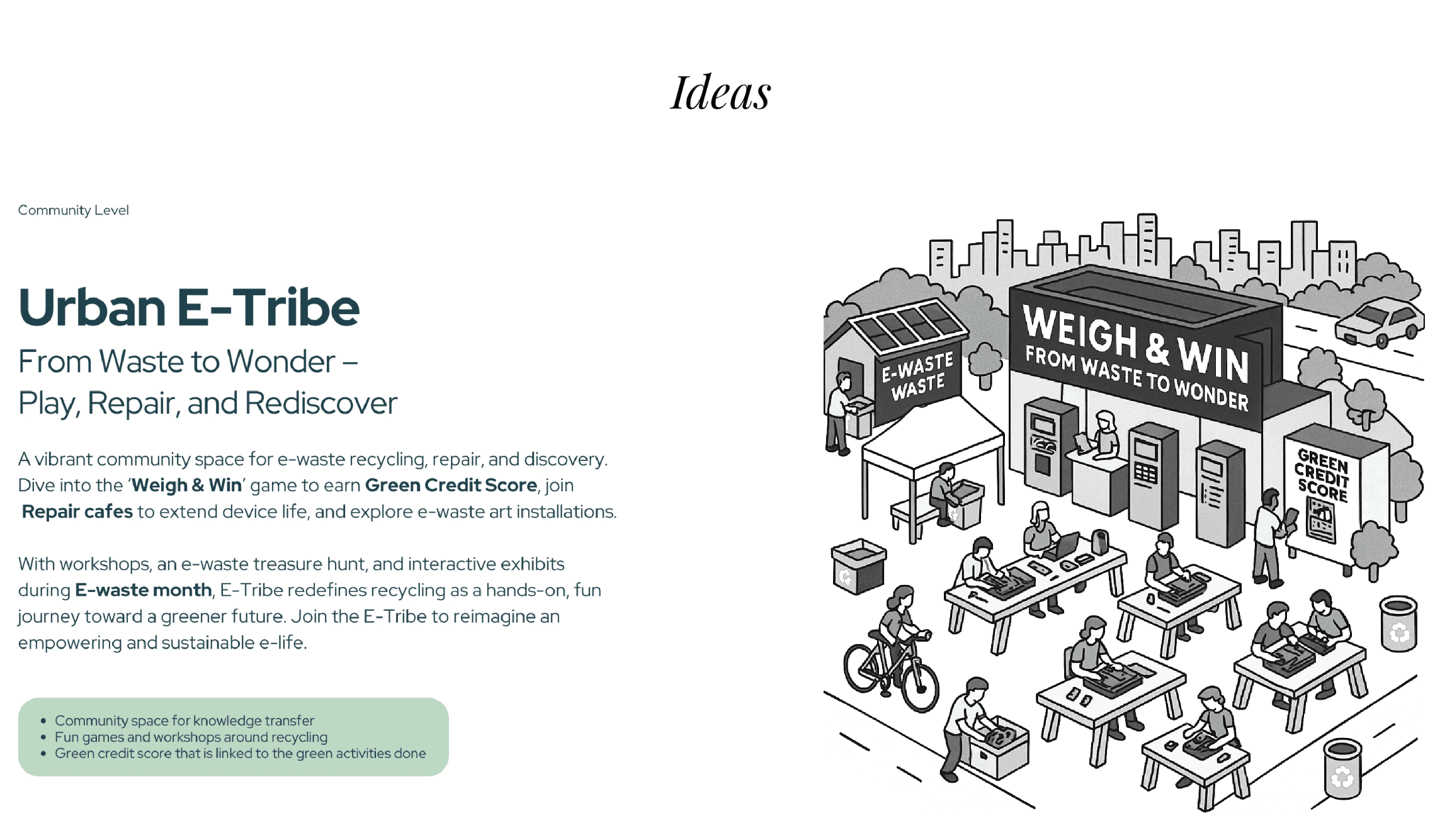
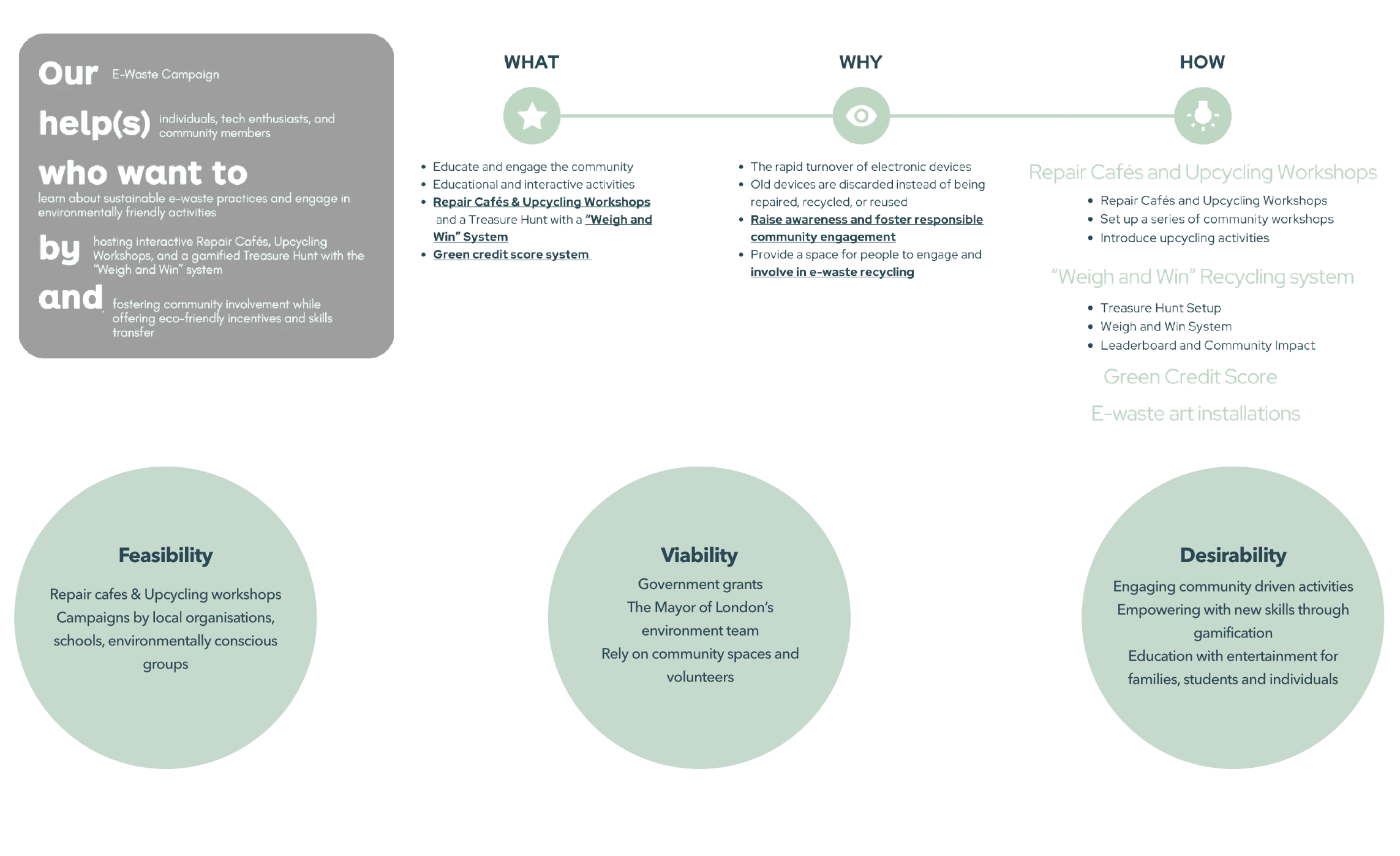
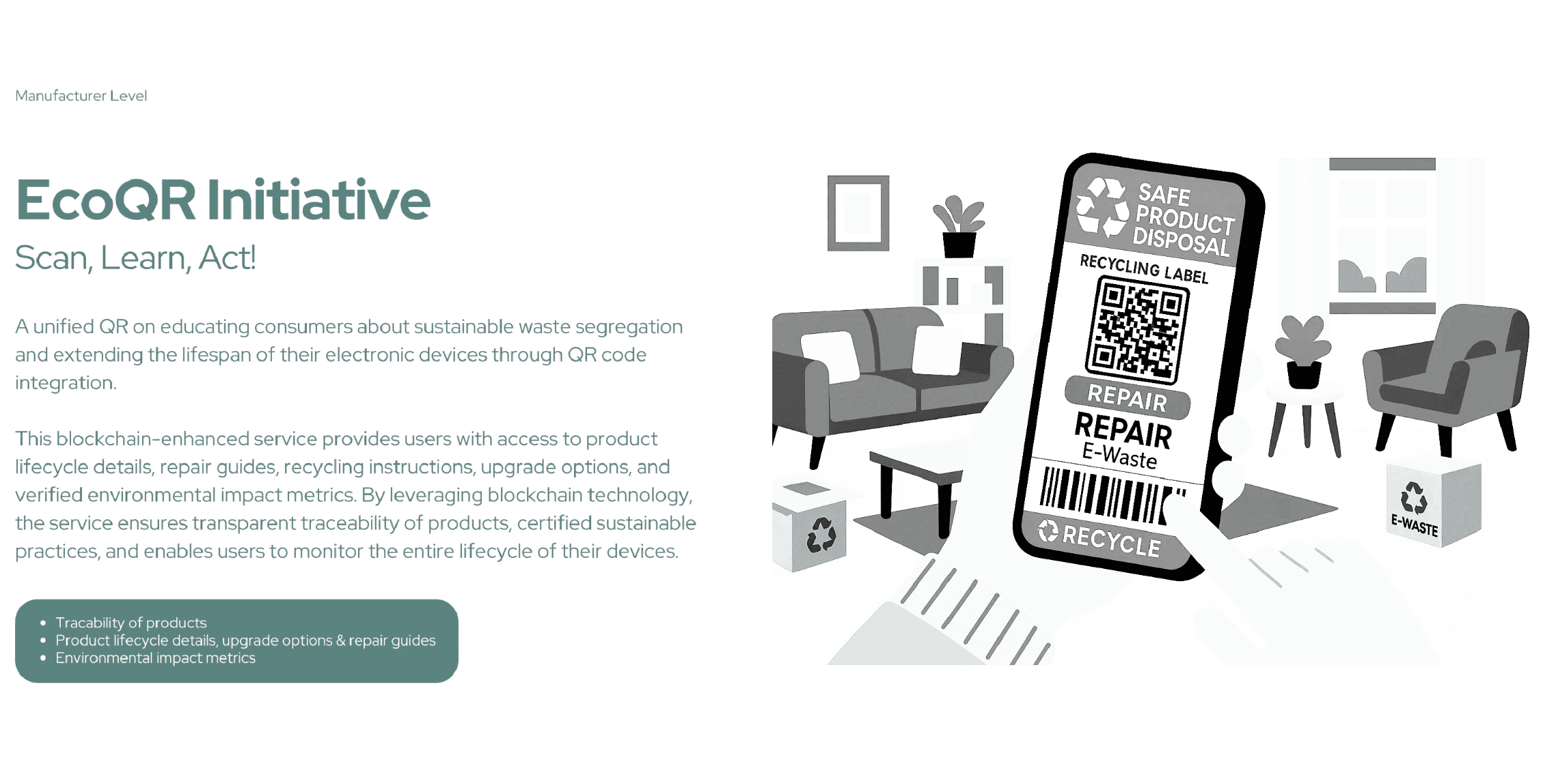
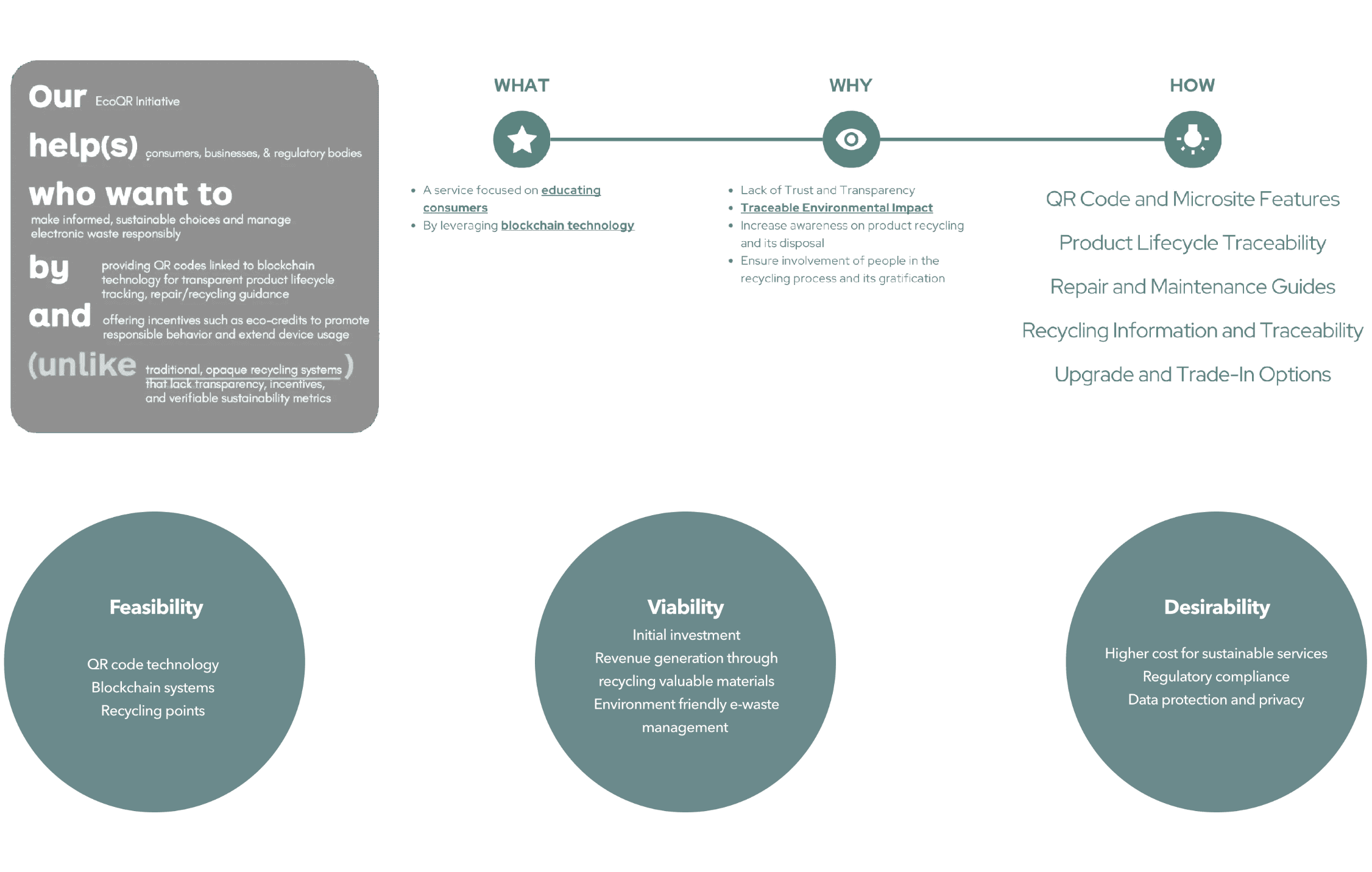
Moving beyond simple "collection bins," we designed a systemic intervention driven by Behavioural Economics. We proposed 'E-Tribe' - a hyper-local service ecosystem that removes friction at three levels:
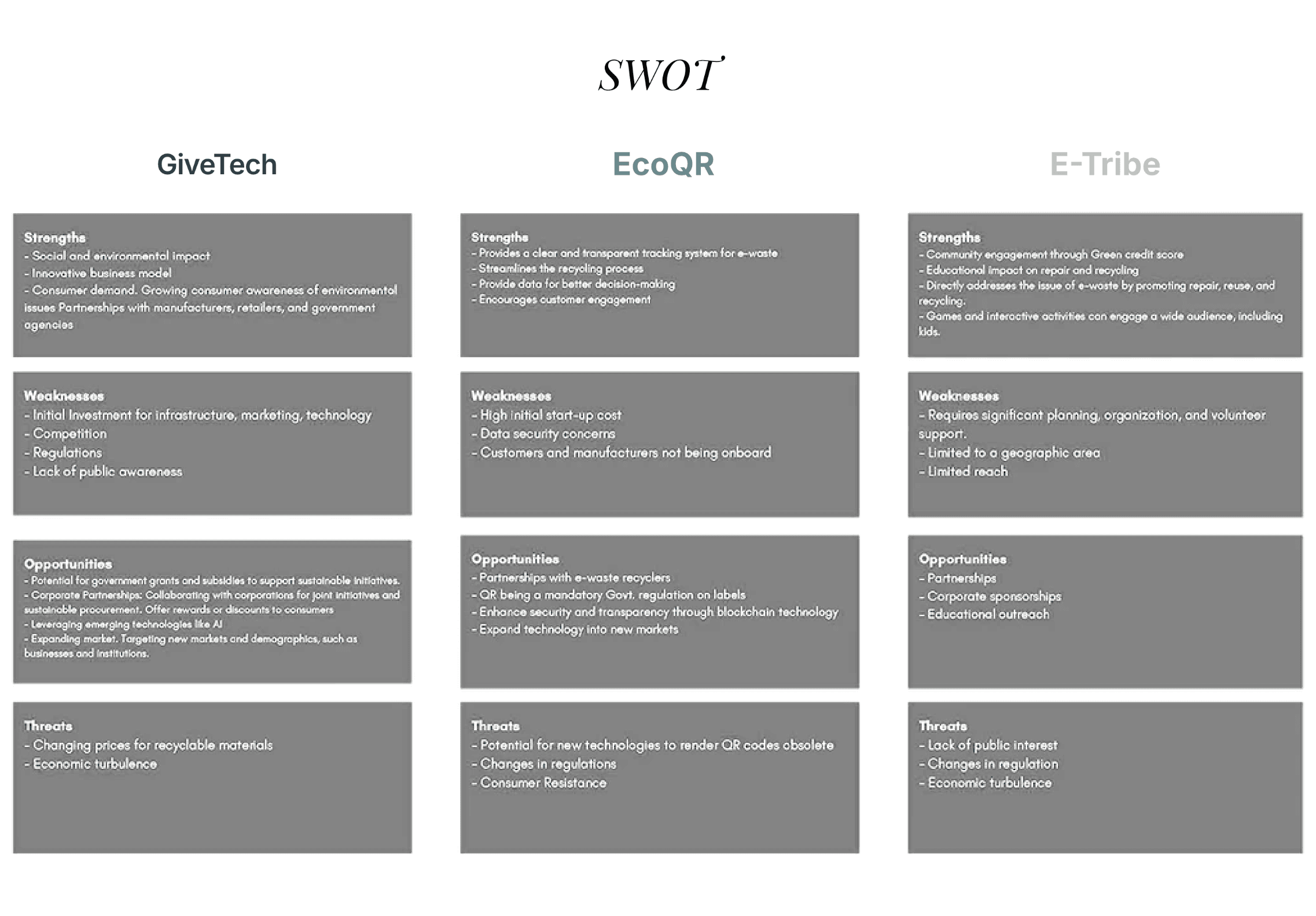
The Community Hub (E-Tribe): Physical workshops for repair and recycling that normalise maintenance over disposal.
The Digital Passport (EcoQR): A transparency tool providing product traceability, ensuring users know exactly where their device goes.
The Nudge (Weigh & Win): A gamified reward system where users earn "Green Credits" based on the weight of e-waste recycled, turning a chore into a tangible value exchange.
Closing the Loop
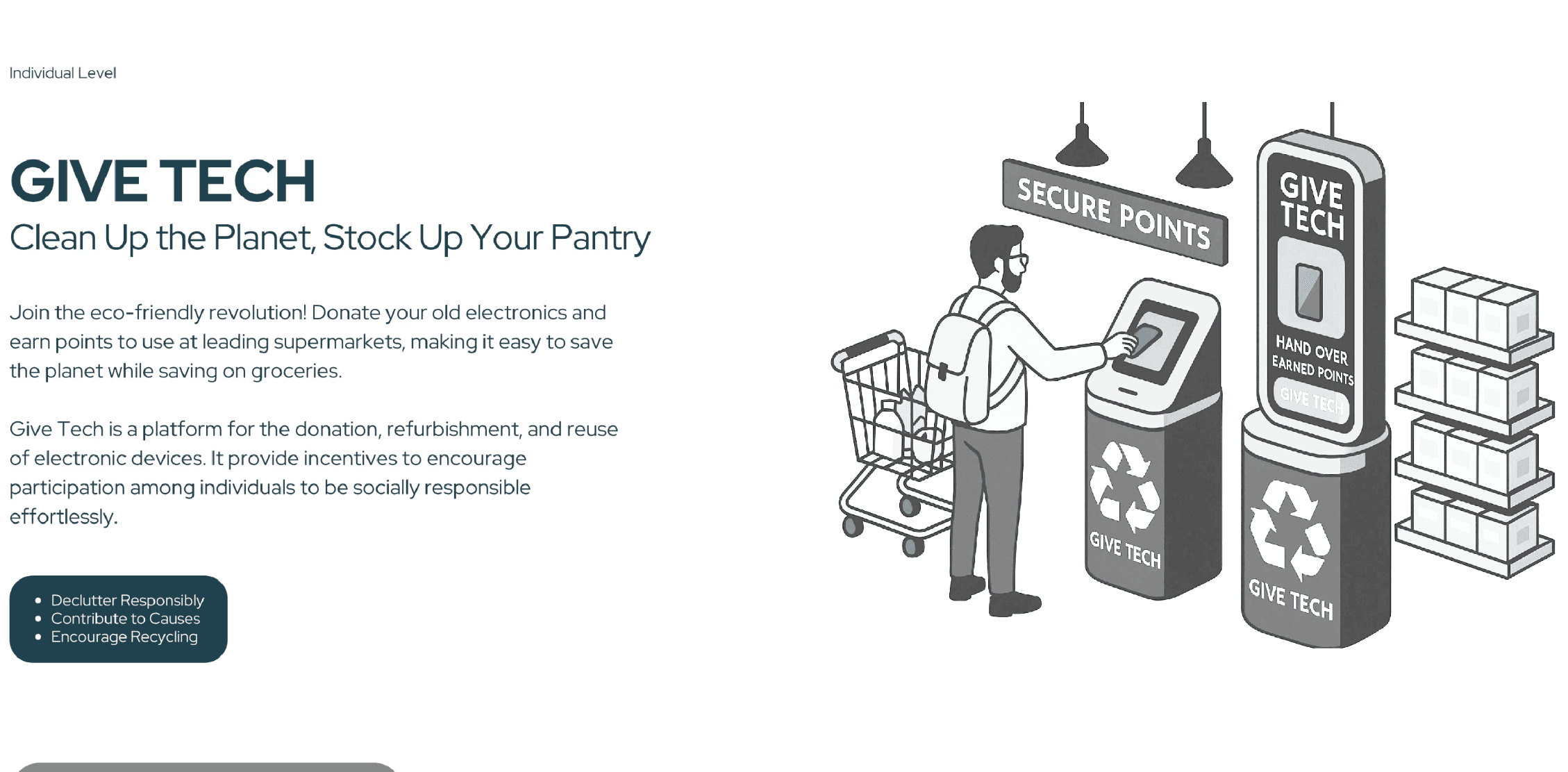
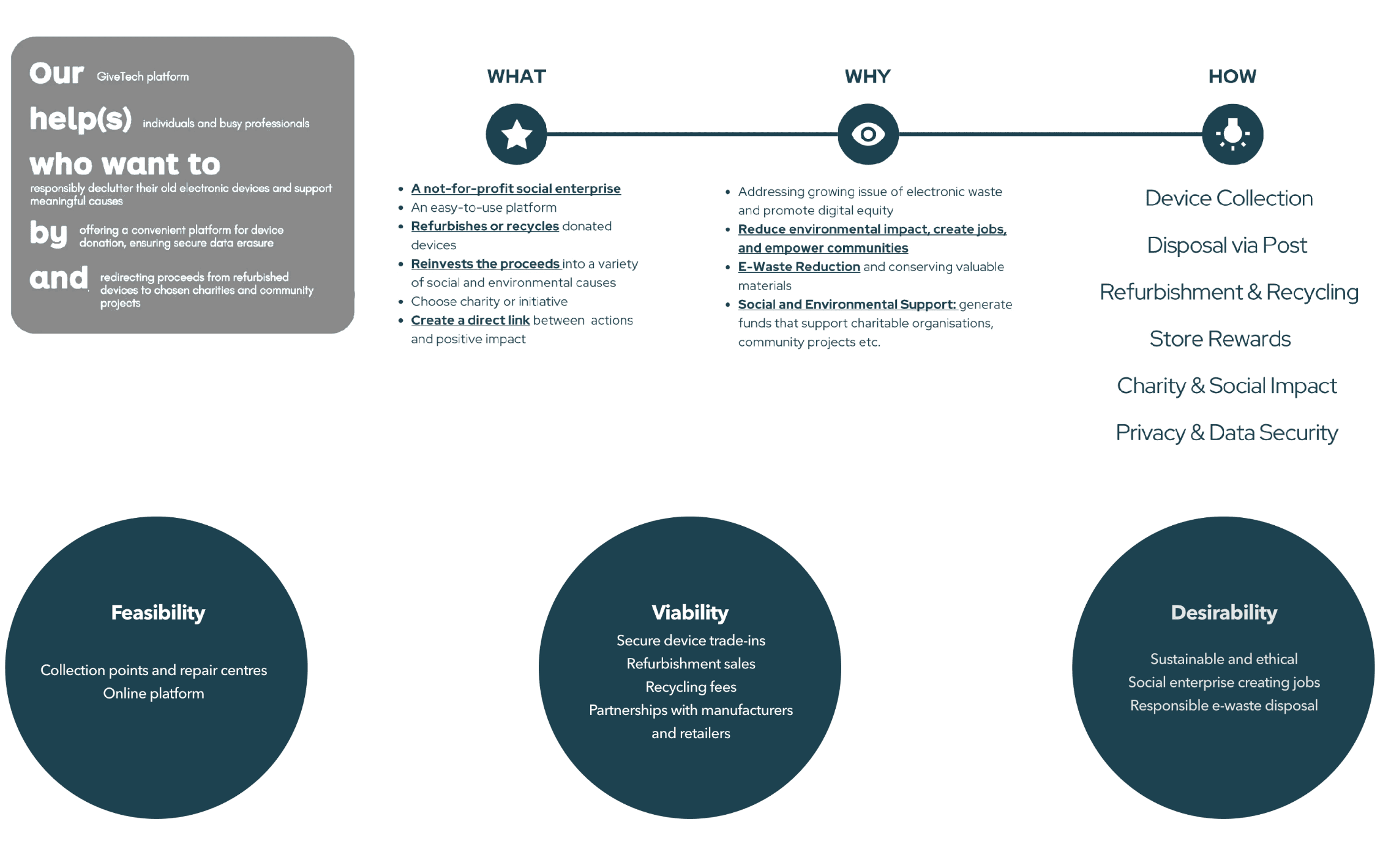
The proposed model shifts the user mindset from "Consumer" to "Steward." By integrating Give-Tech (a donation stream) with tangible rewards, the service extends the lifespan of electronics and fosters community-led circularity. The framework offers a scalable blueprint for cities looking to reduce their environmental footprint through engagement rather than regulation.
© E-Tribe
Role
Service Designer & Behavioral Strategist
Context
Urban Systems / City of London
Duration
6 Weeks (Sprint)
Methods
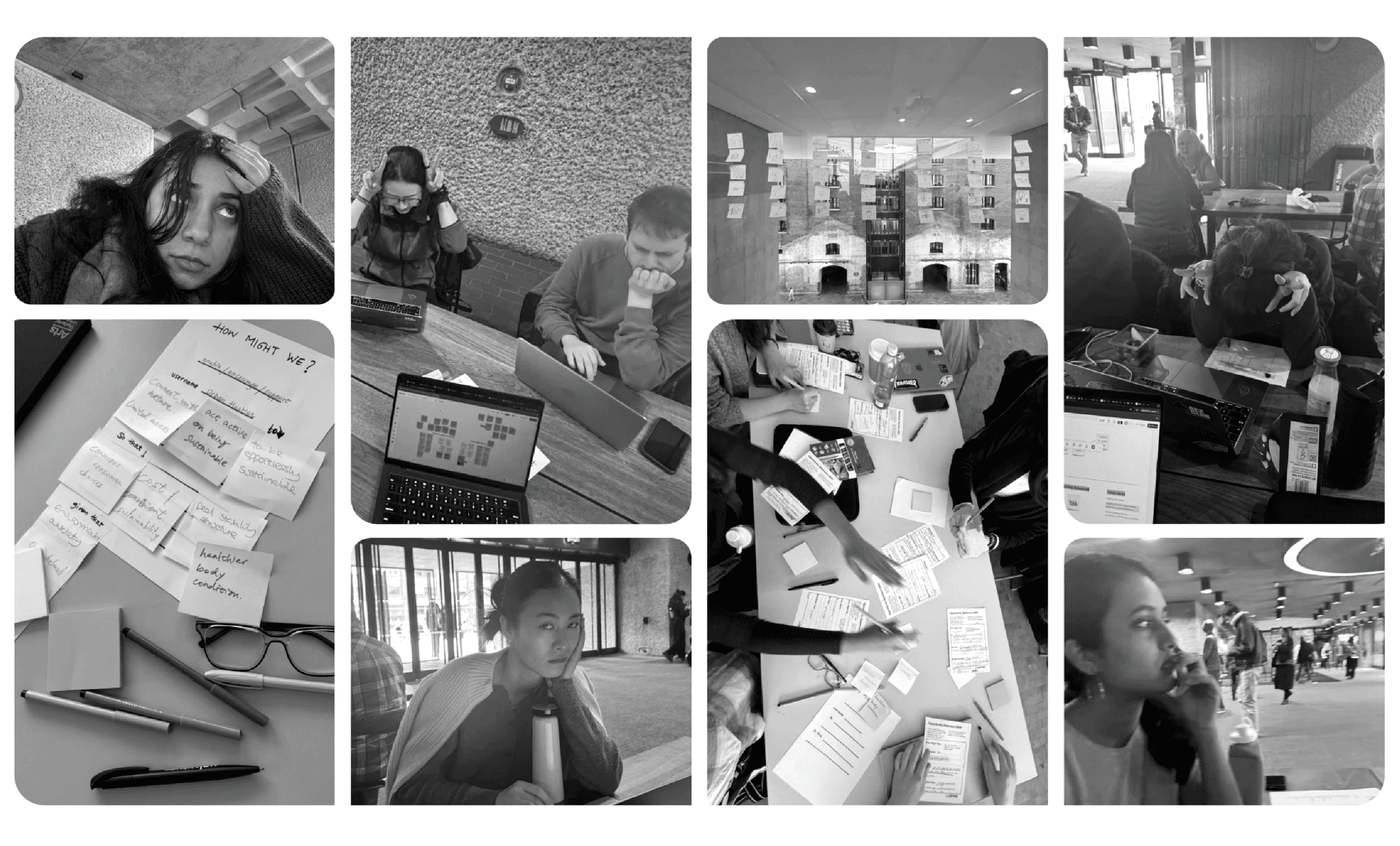
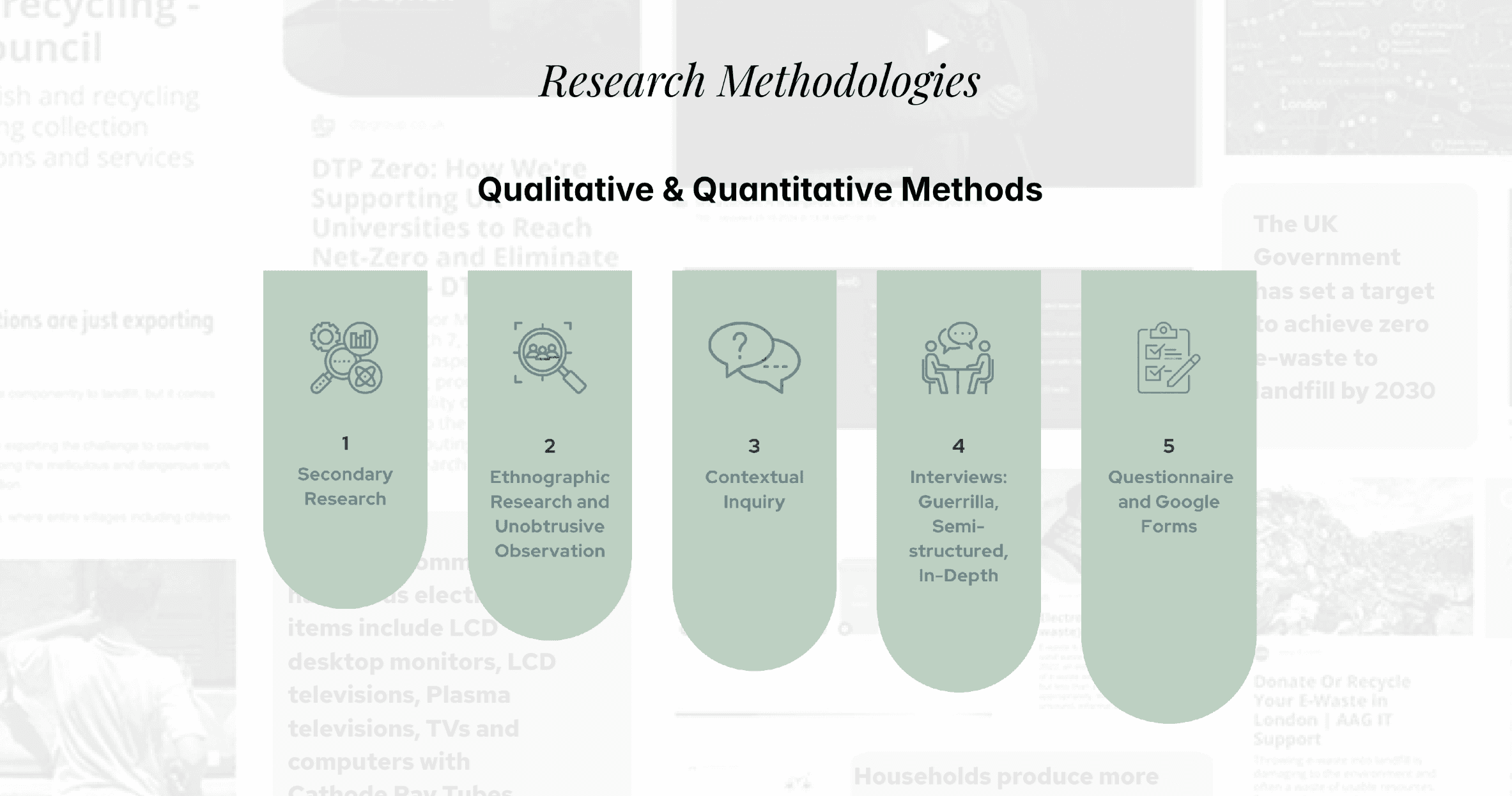
Systems Thinking, Ethnography, Nudge Theory, Service Blueprinting
Outcome
Circular Service Model & Digital Product Passport Strategy
Team
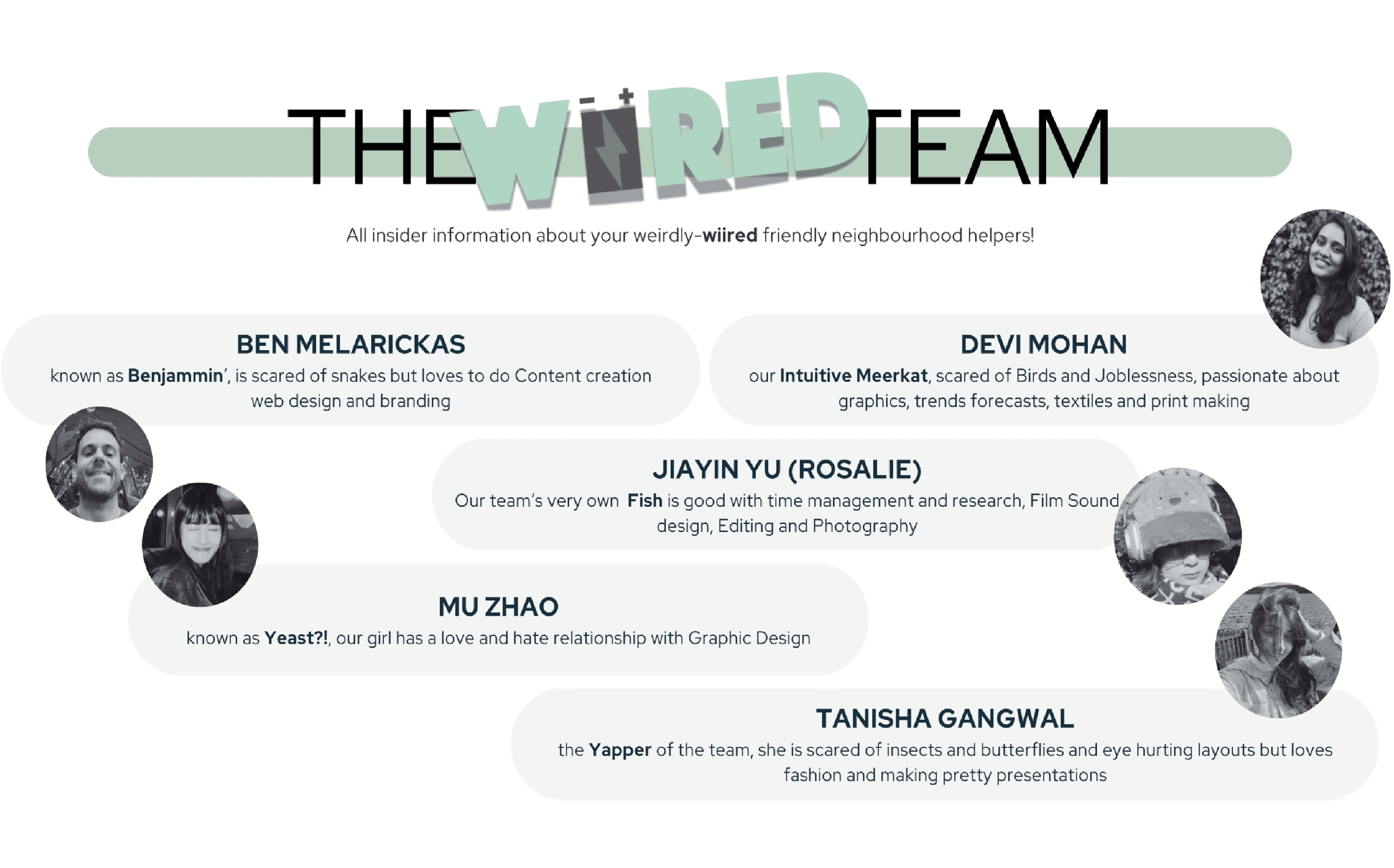
Group of 5
Navigating Narratives
Jio Devices