Navigating Narratives
Reimagining the Future of Cultural Heritage through Hyper-Personalised Augmented Reality
The Strategic Gap
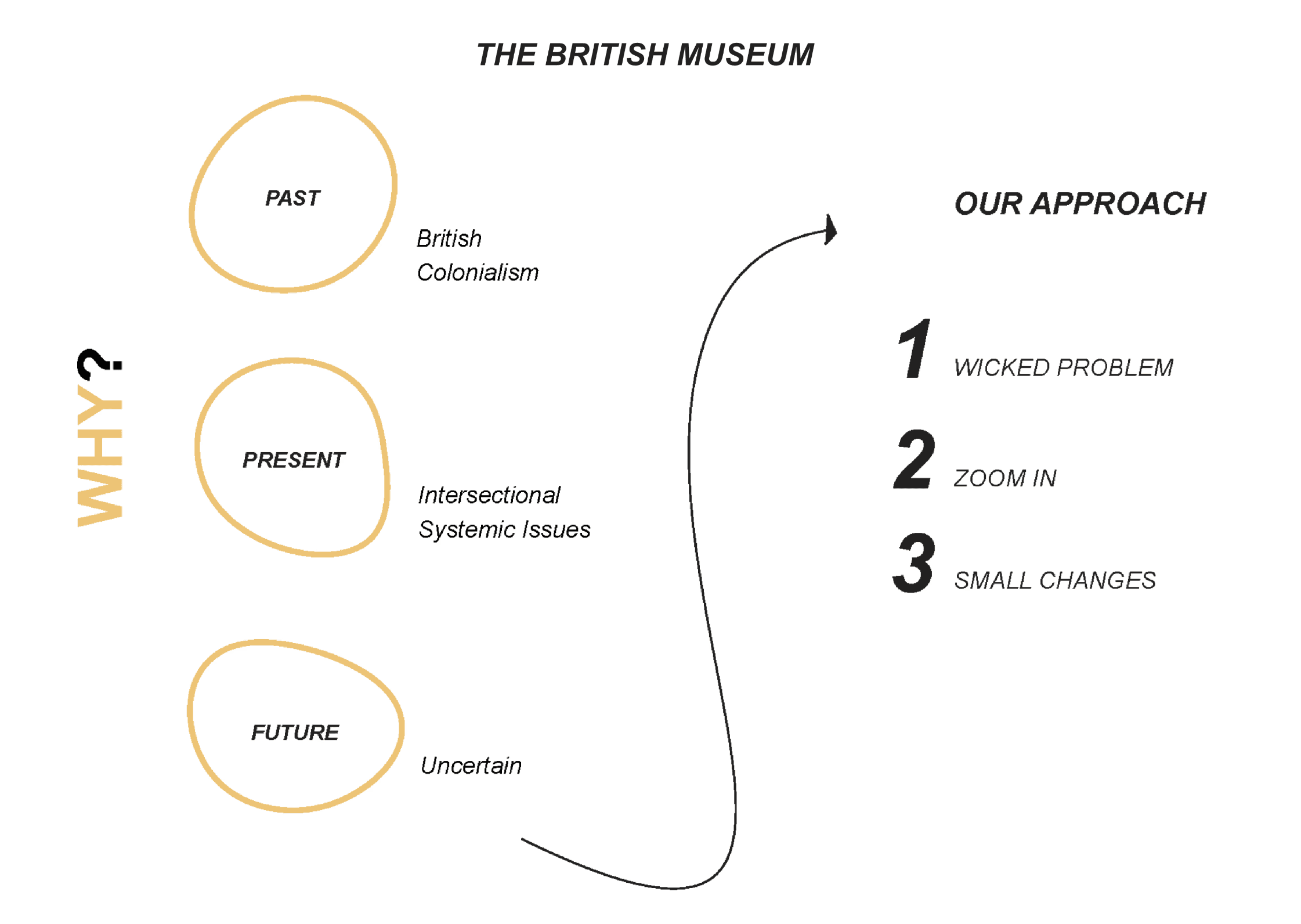
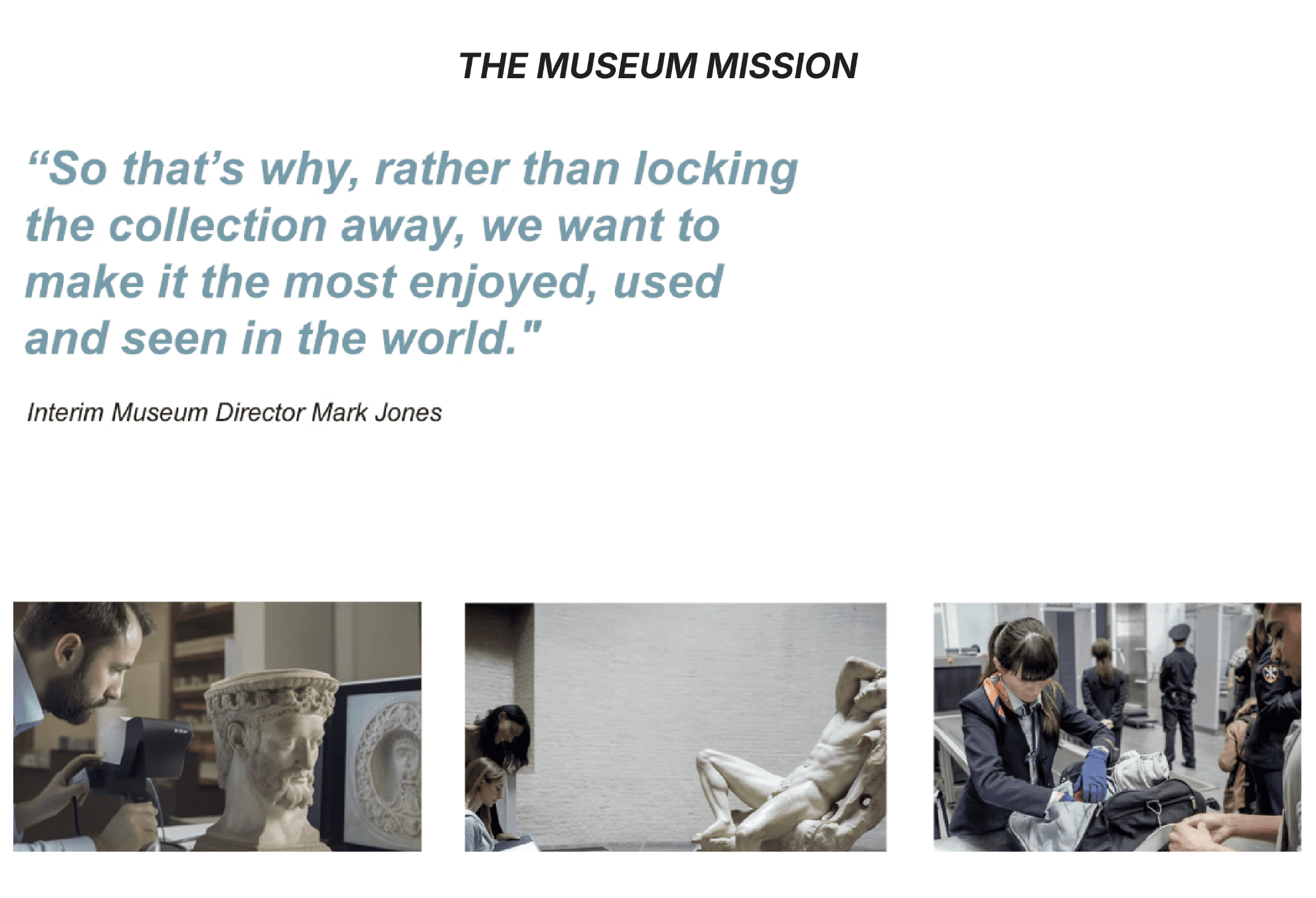
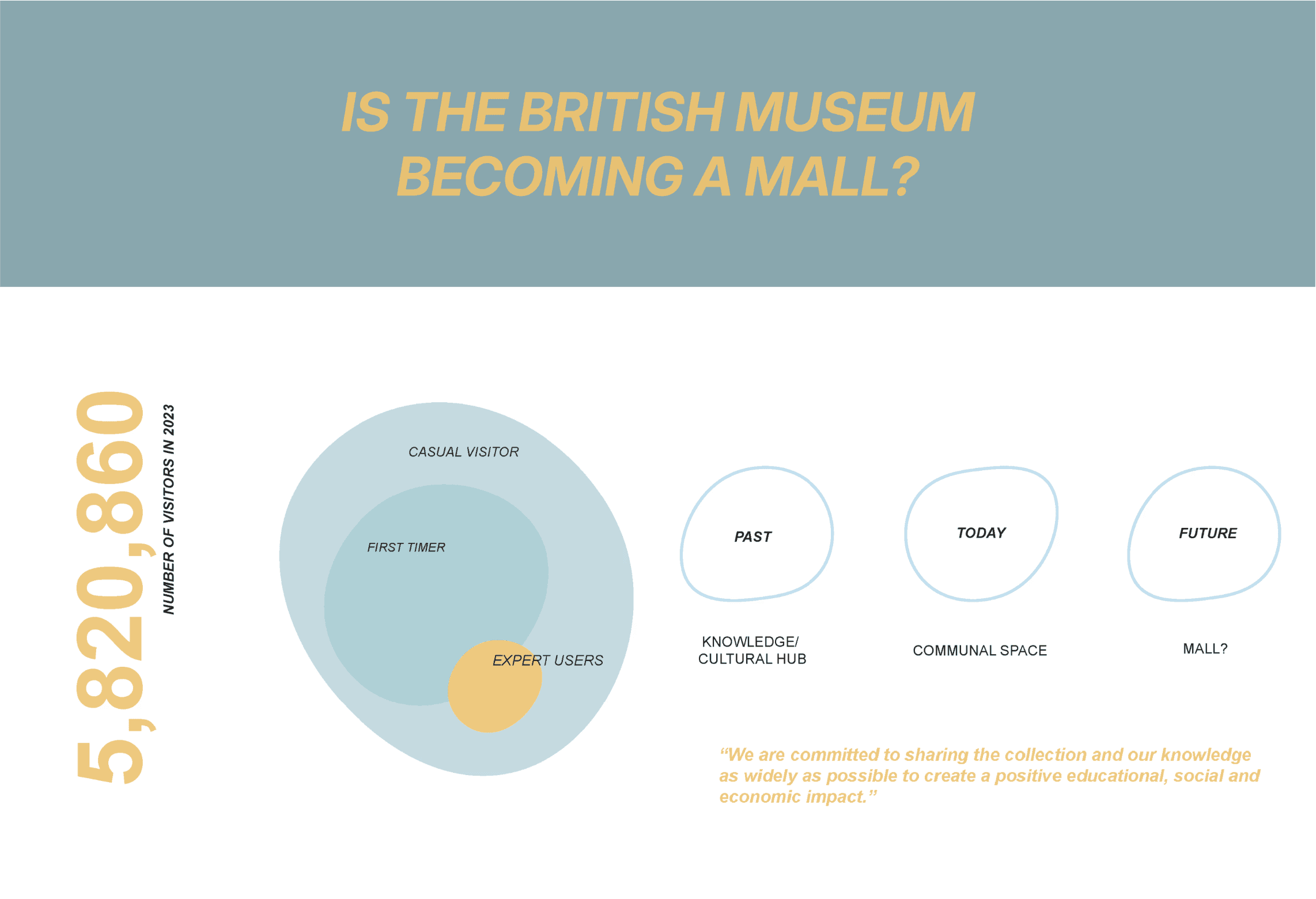
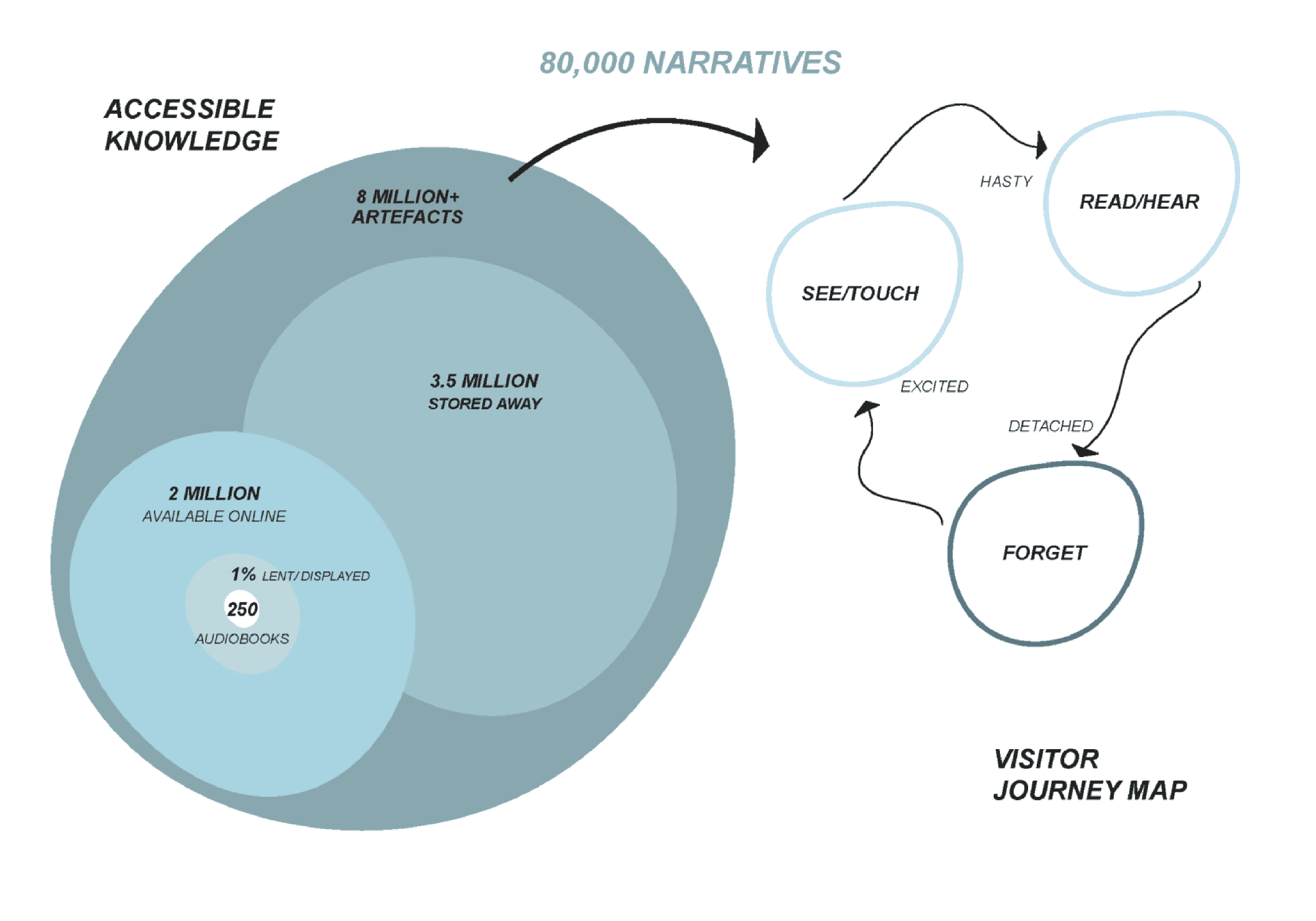
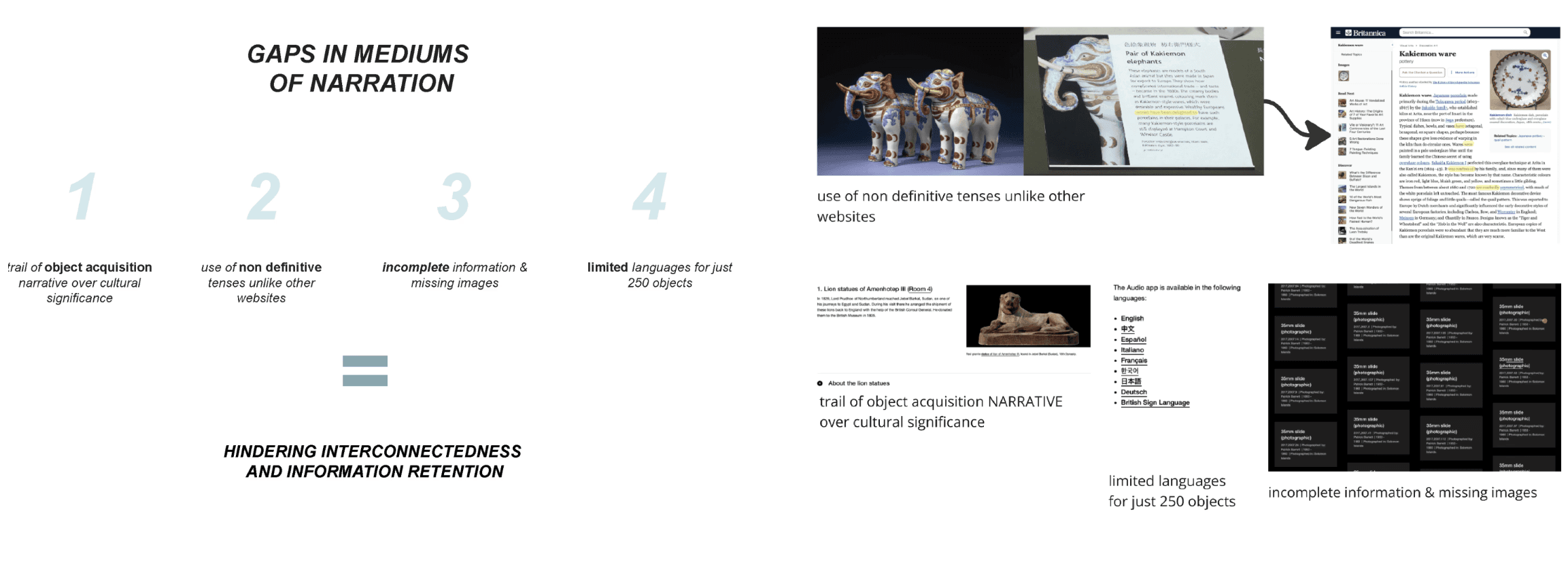
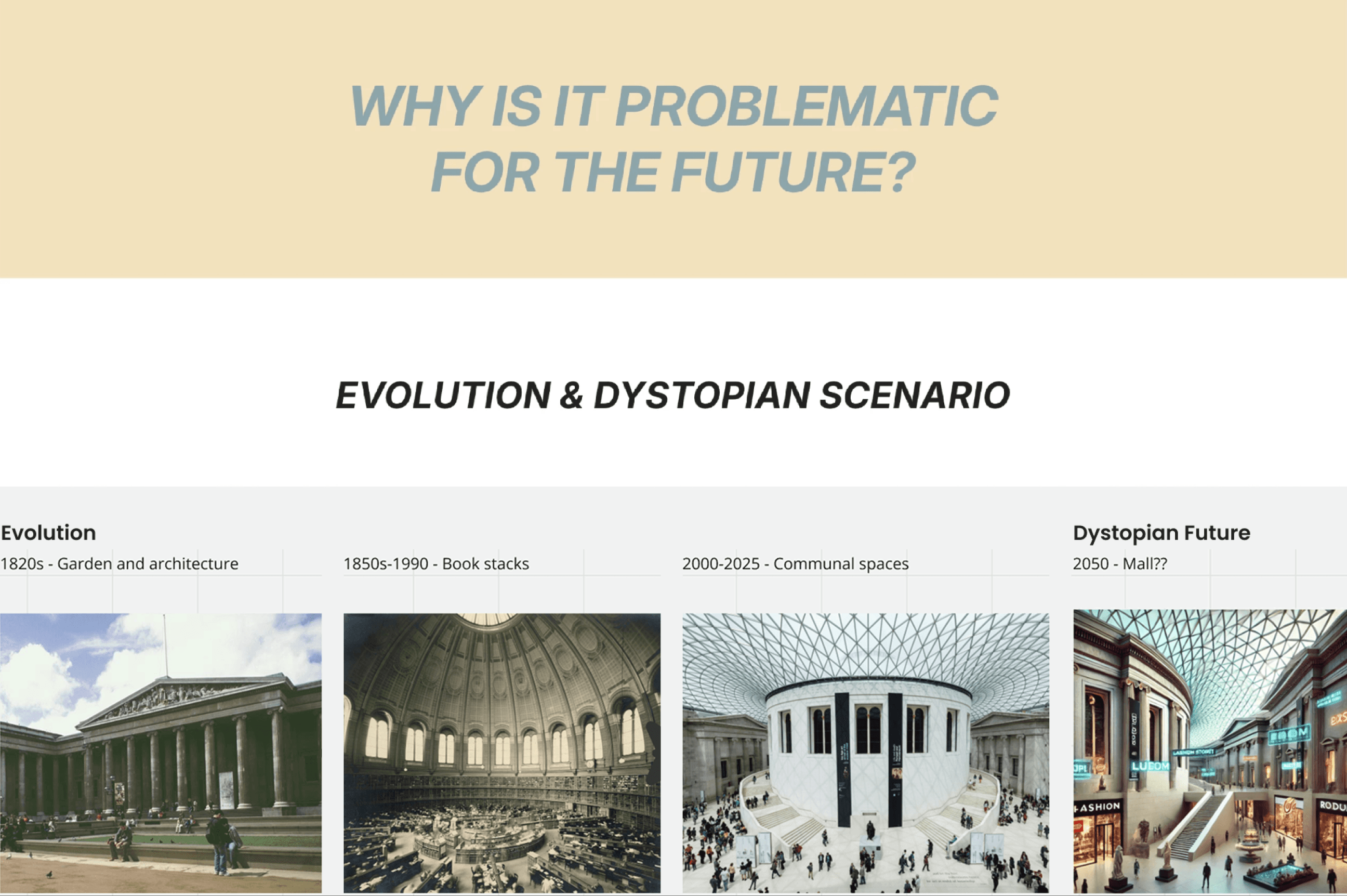
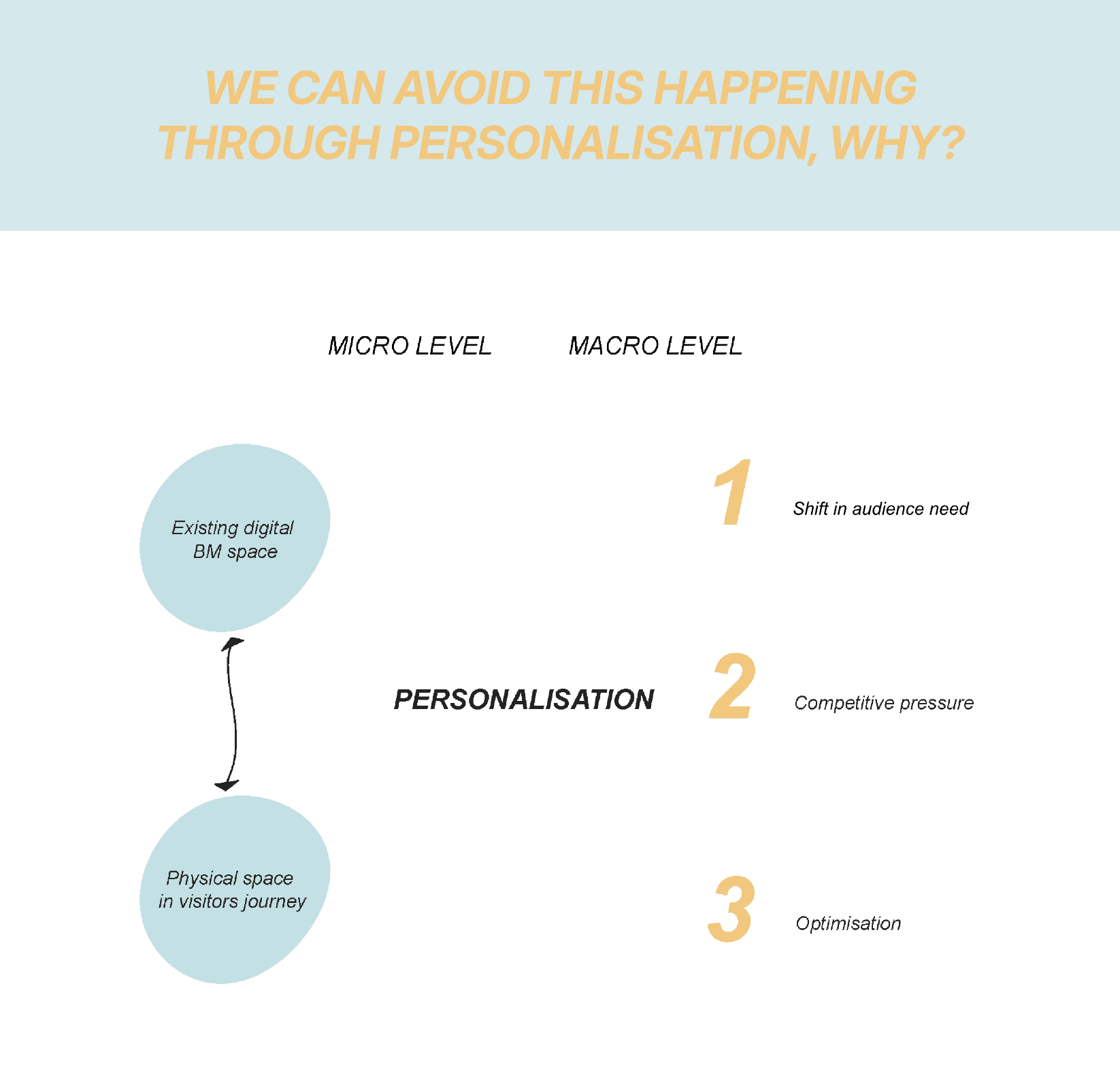
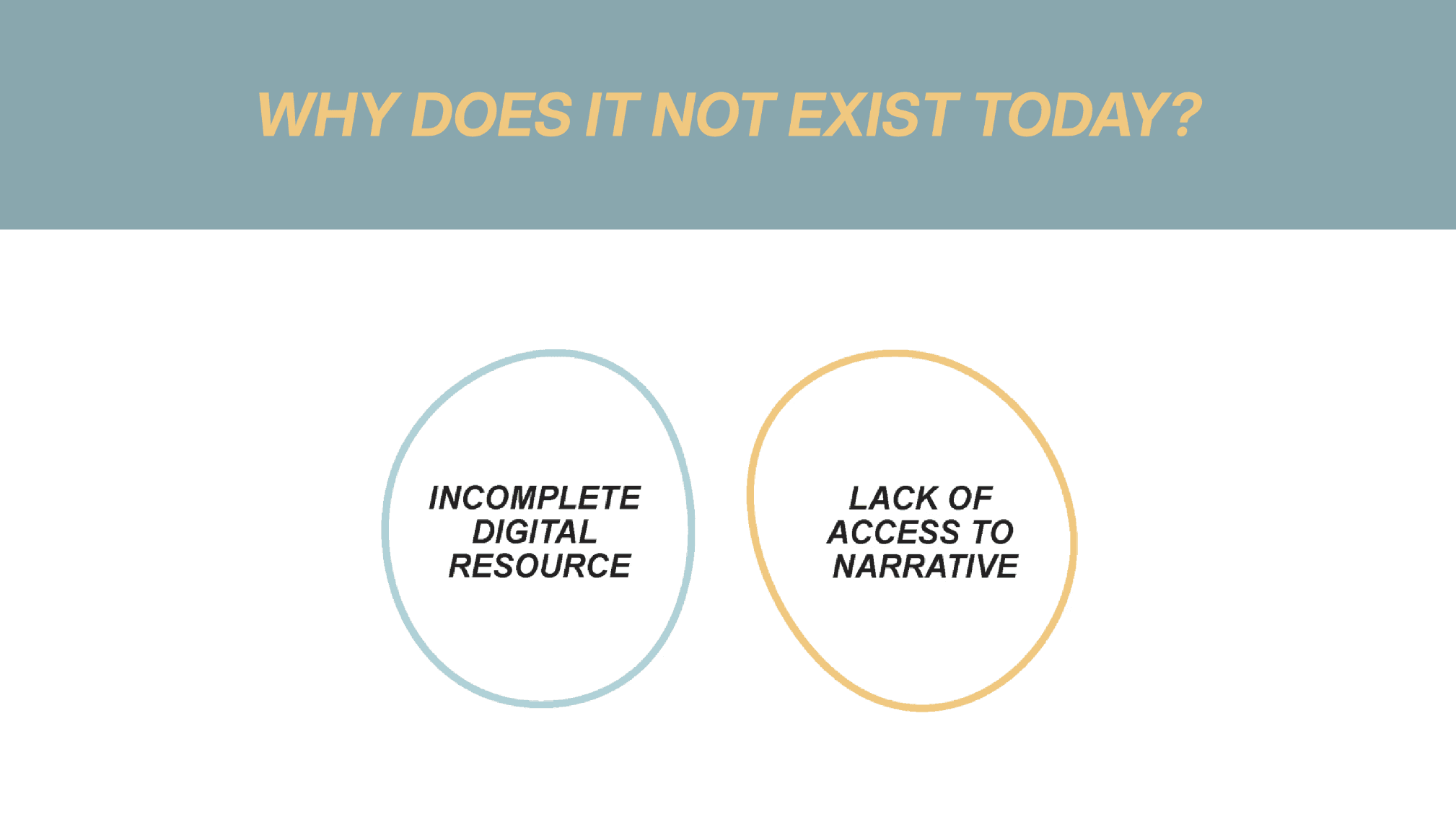
The British Museum stands at a critical juncture: facing a legacy of colonial narratives while trying to serve a modern audience overwhelmed by information. Our research revealed that for many visitors, the museum is not an enlightening experience but an anxious one plagued by overcrowding, fragmented storytelling, and "narrative overload." The challenge was existential:
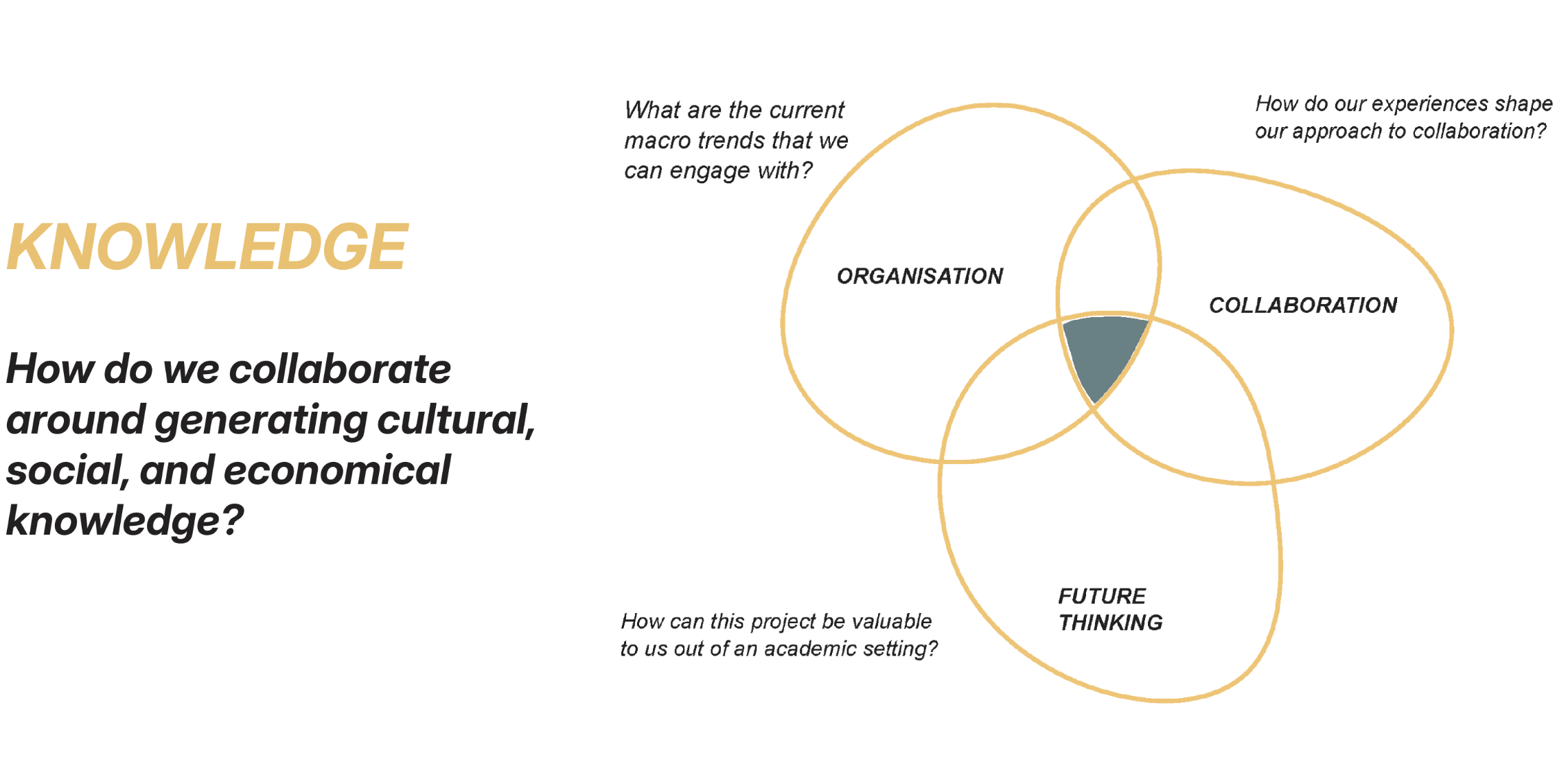
How might we transform the museum from a static repository of objects into a dynamic, user-centric knowledge ecosystem without compromising its scholarly depth?
Decoding the Visitor Experience
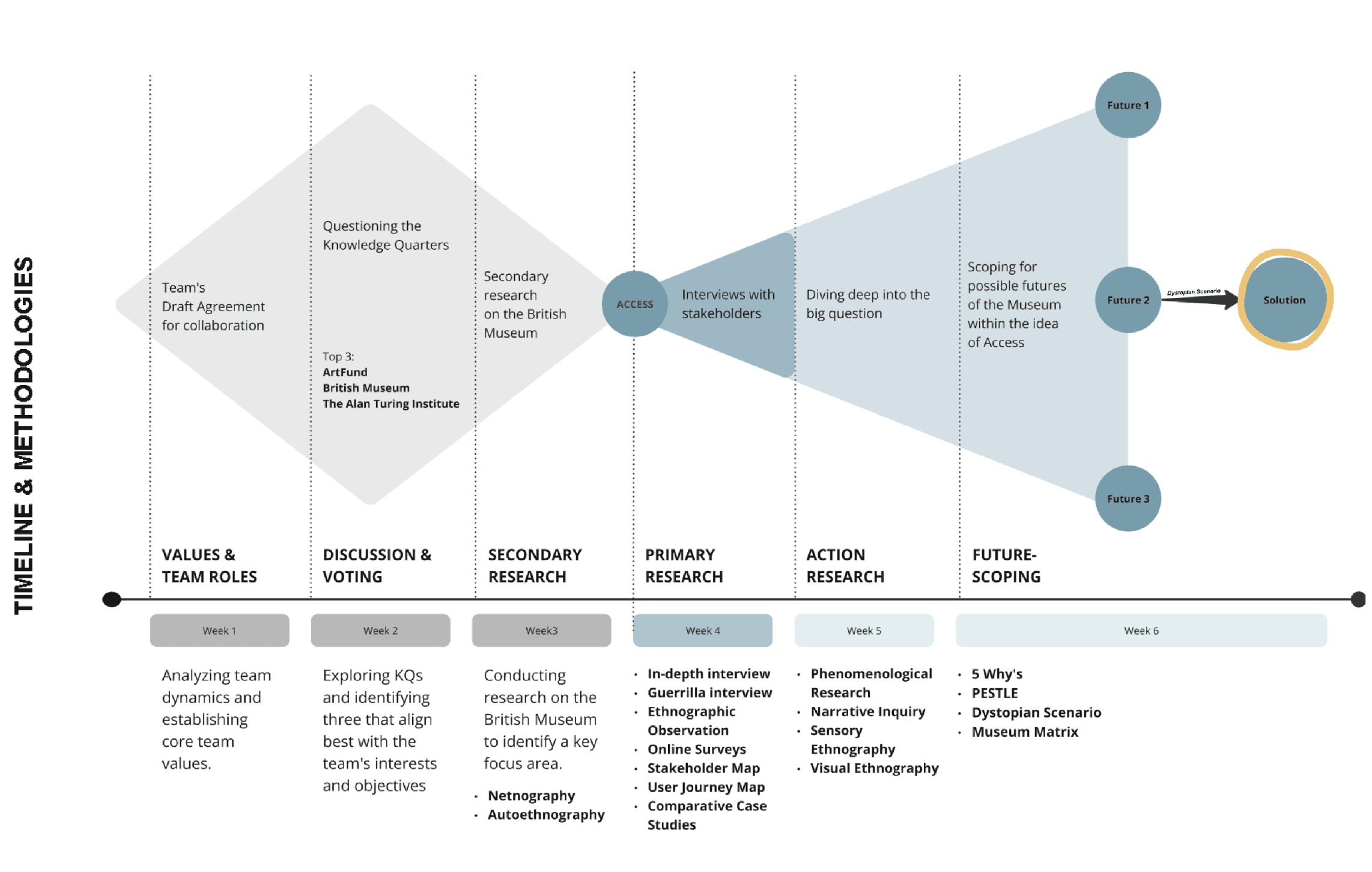
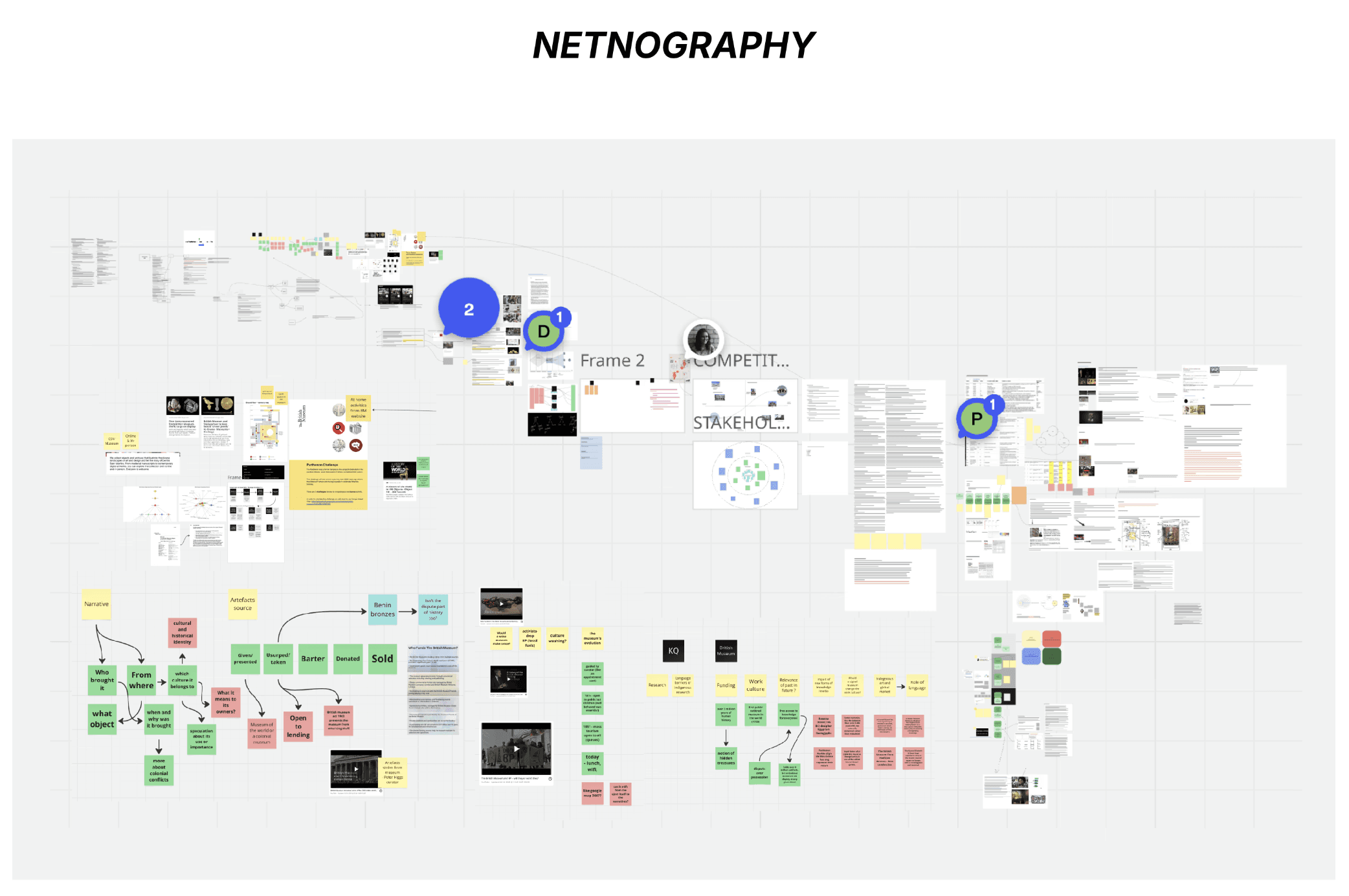
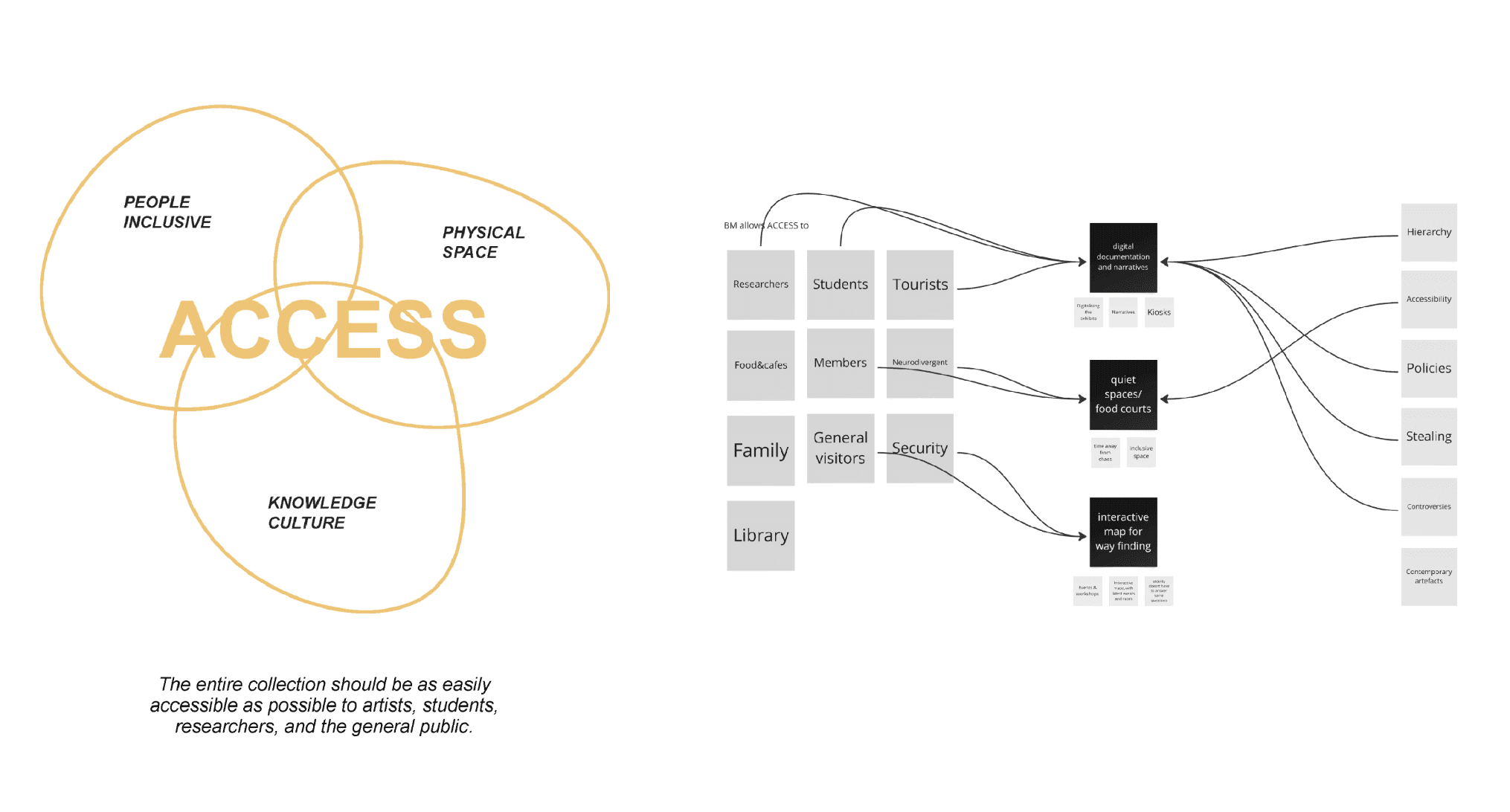
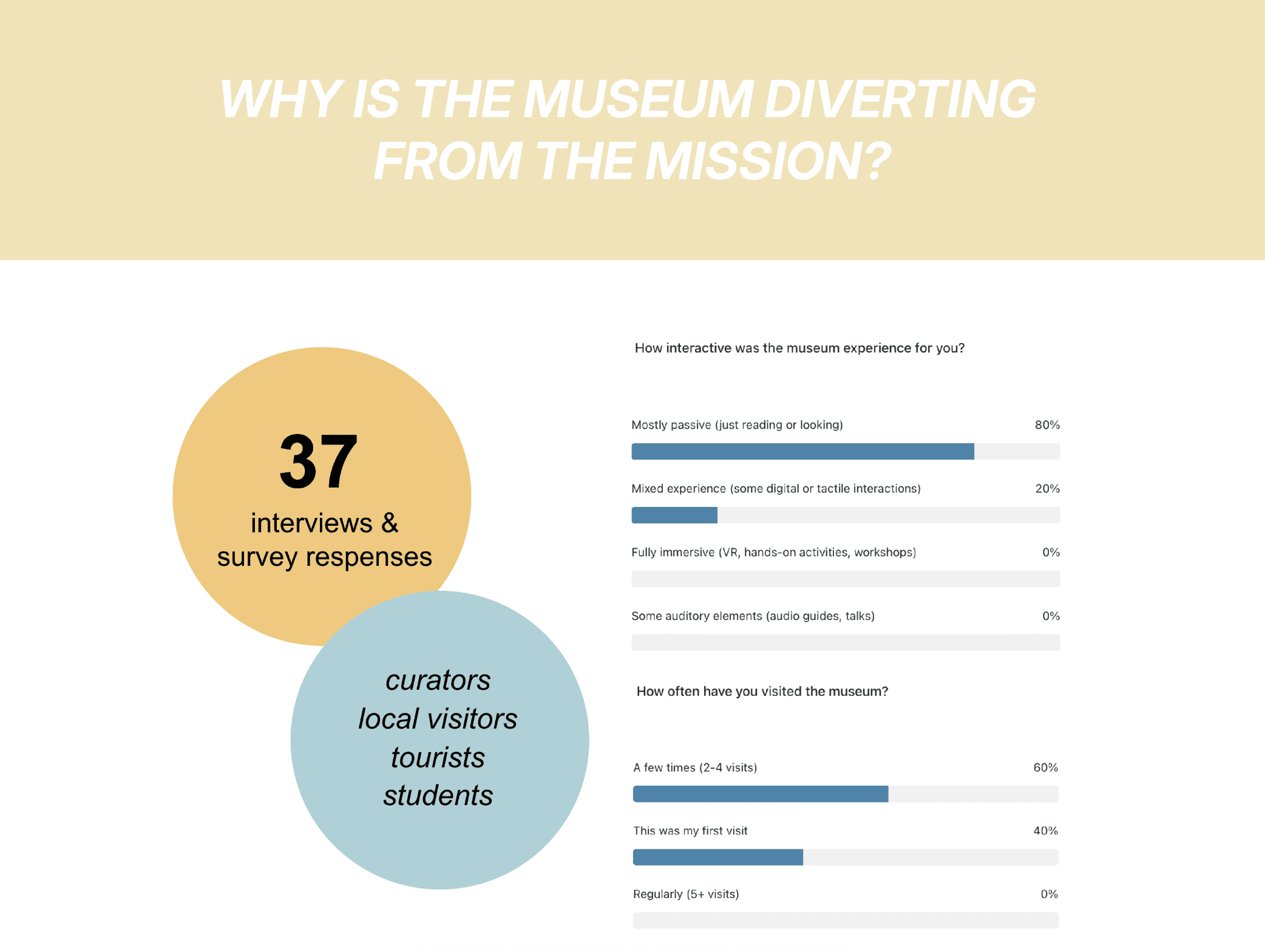
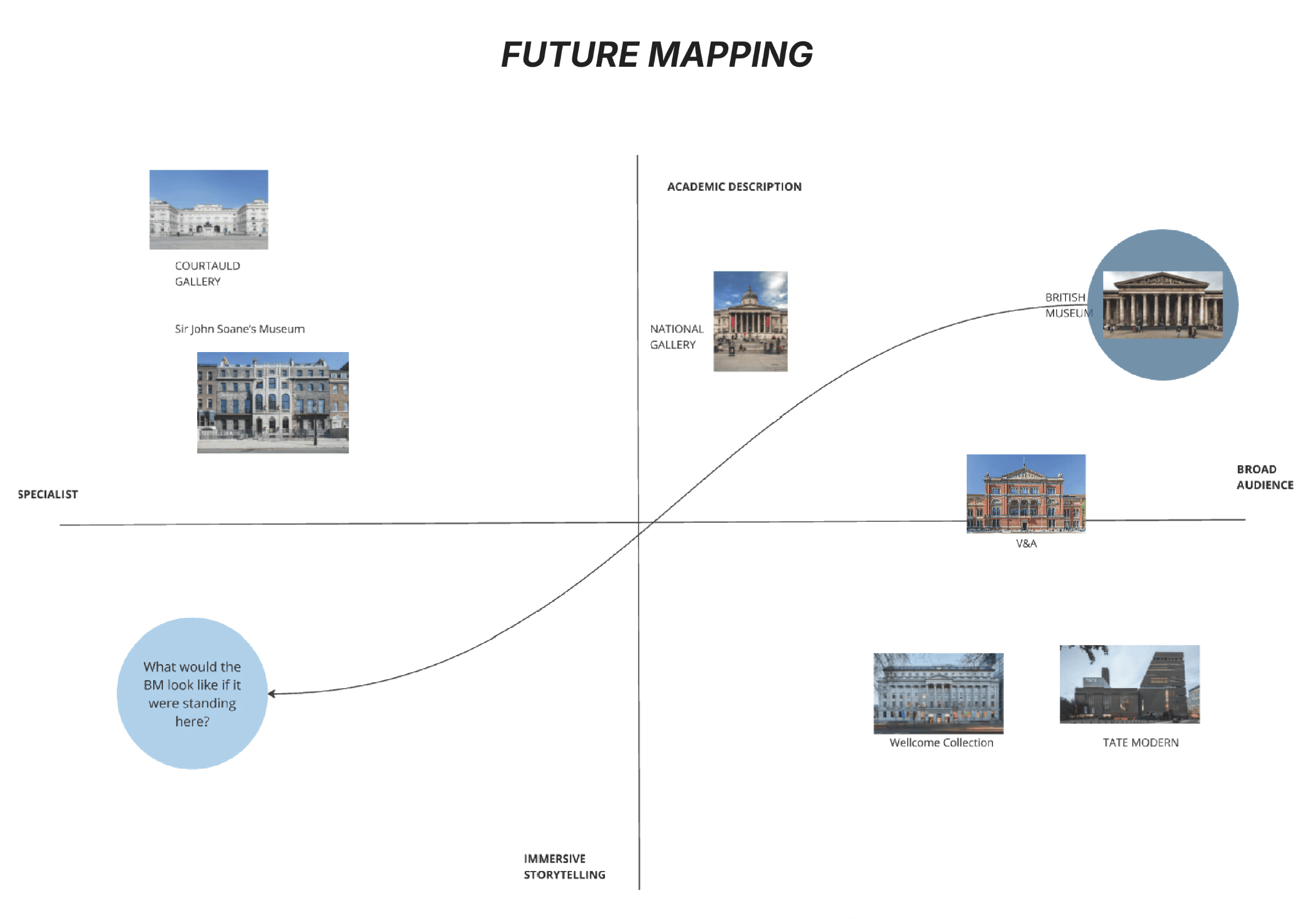
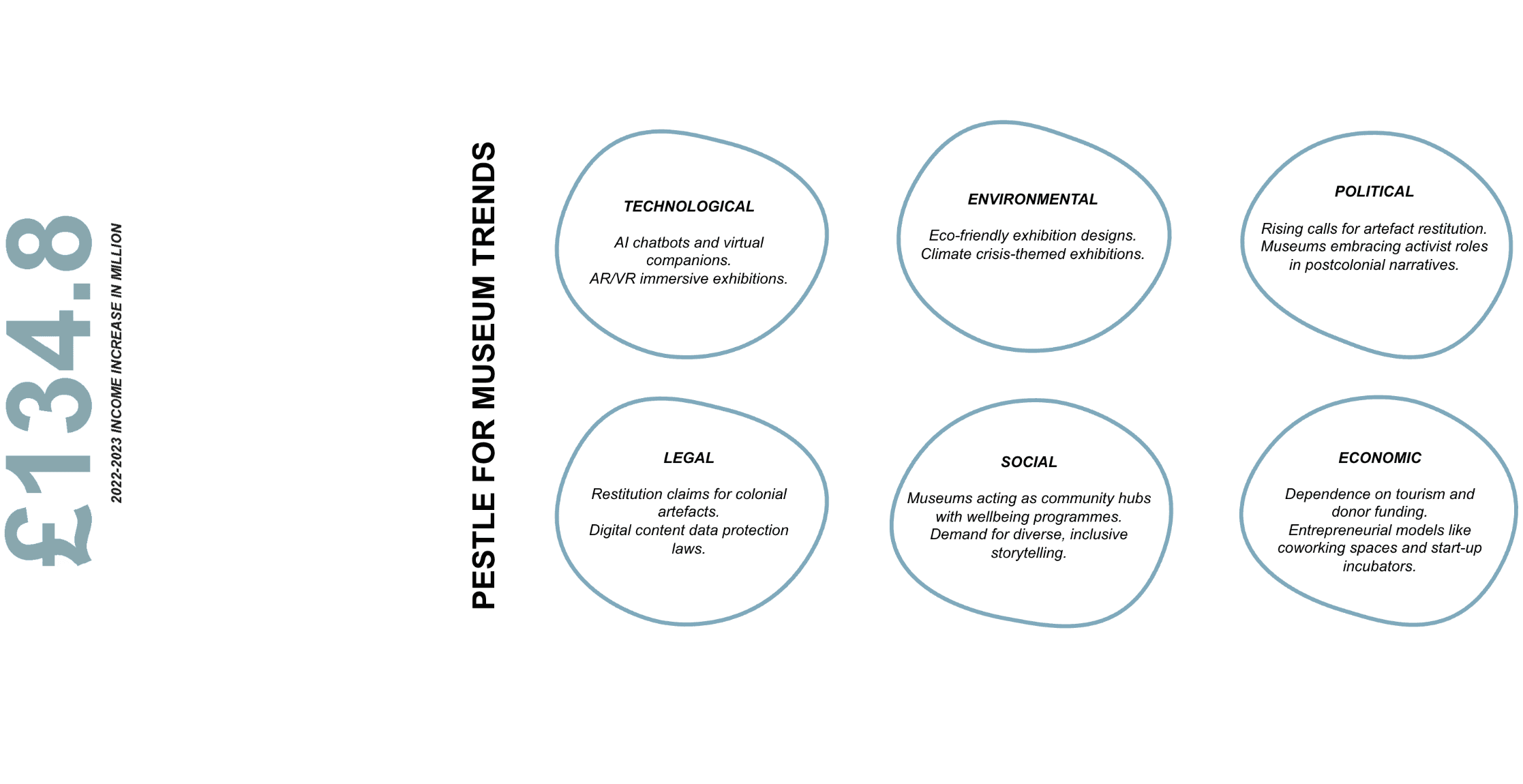
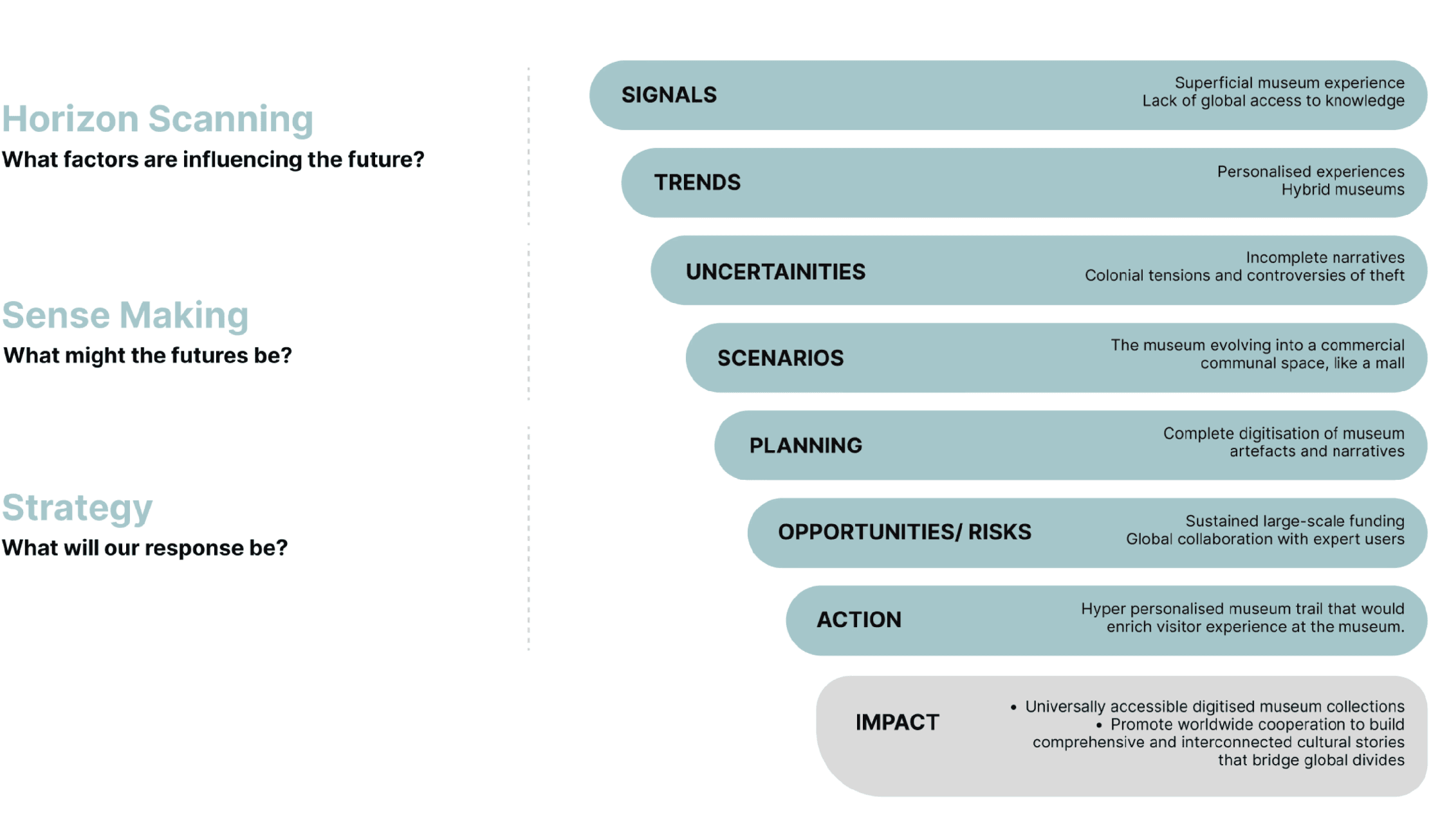
We approached the museum not just as a building, but as a complex service environment. Using Autoethnography and Netnography, we mapped the emotional journey of the visitor, uncovering deep friction points around accessibility and context. We utilized PESTLE Analysis to examine external risks, specifically the ethical pressure to decolonize collections, and identified that technology should not be a gimmick, but a tool for "Calm Access."
A Hyper-Personalized Digital Layer
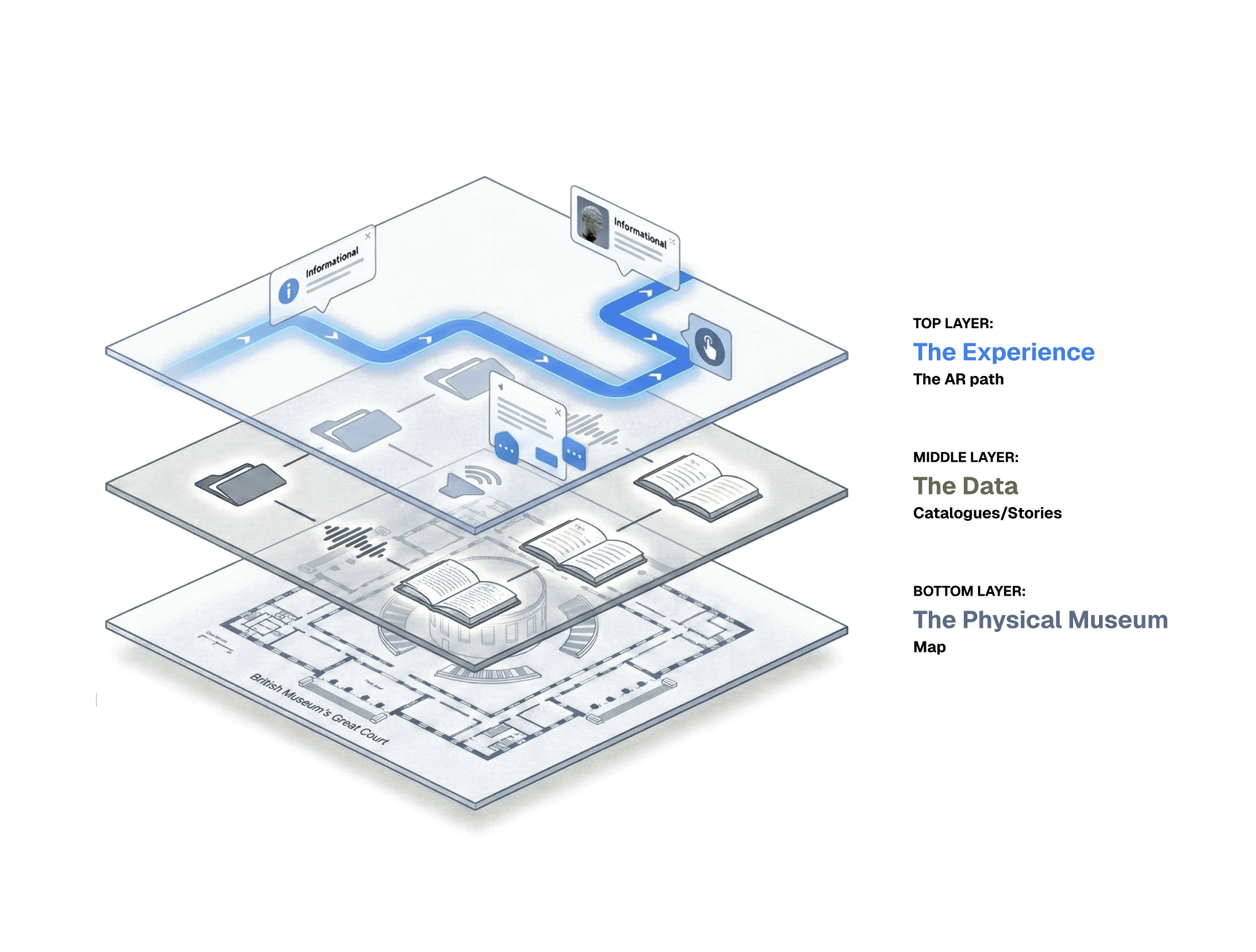
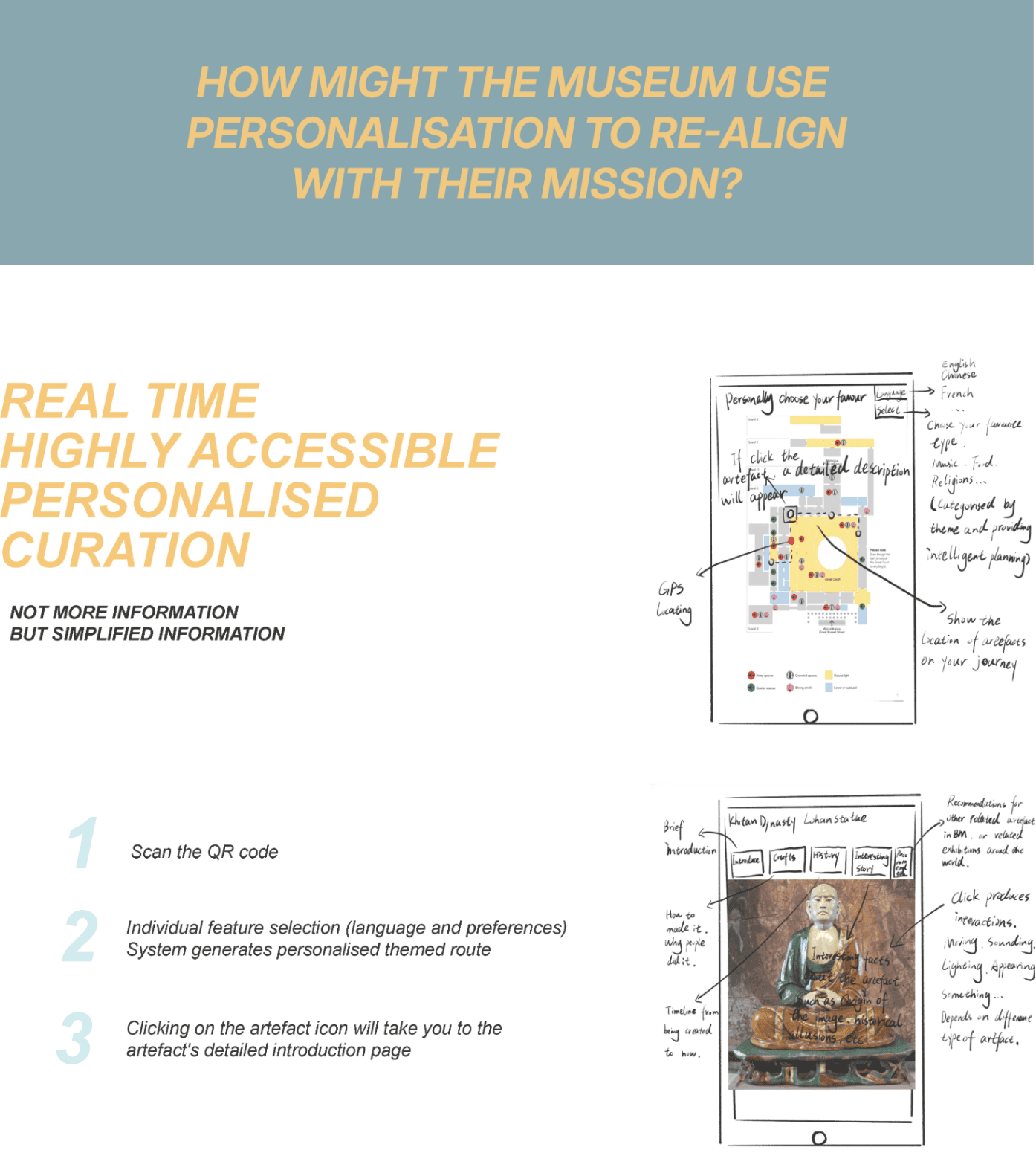
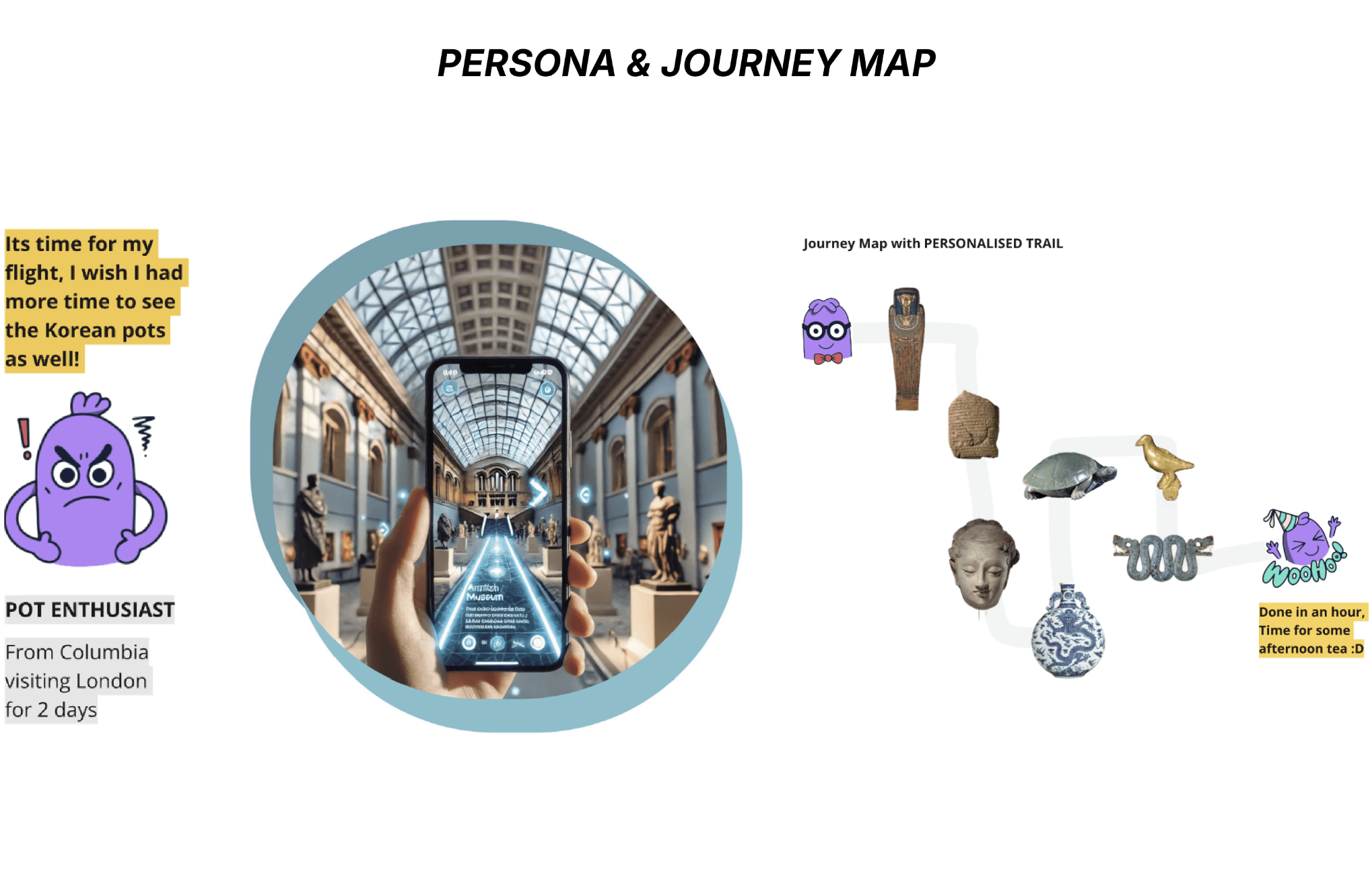
We proposed a "Digital Overlay" strategy that respects the physical sanctity of the museum while revolutionizing access. The core intervention is a Hyper-Personalized AR Trail—a responsive system that curates routes based on the visitor’s time, interests, and accessibility needs. By leveraging existing digital catalogues, this solution democratizes knowledge, allowing users to navigate complex histories on their own terms and transforming passive observation into active, personalised discovery.
© Navigating Narratives
Role
Research & Foresight Strategist
Client
The British Museum (Academic Brief)
Duration
6 weeks
Methods
Autoethnography, PESTLE Analysis Scenario Building, Action Research, Speculative Design
Outcome
Speculative Futures & AR Service Prototype
Team
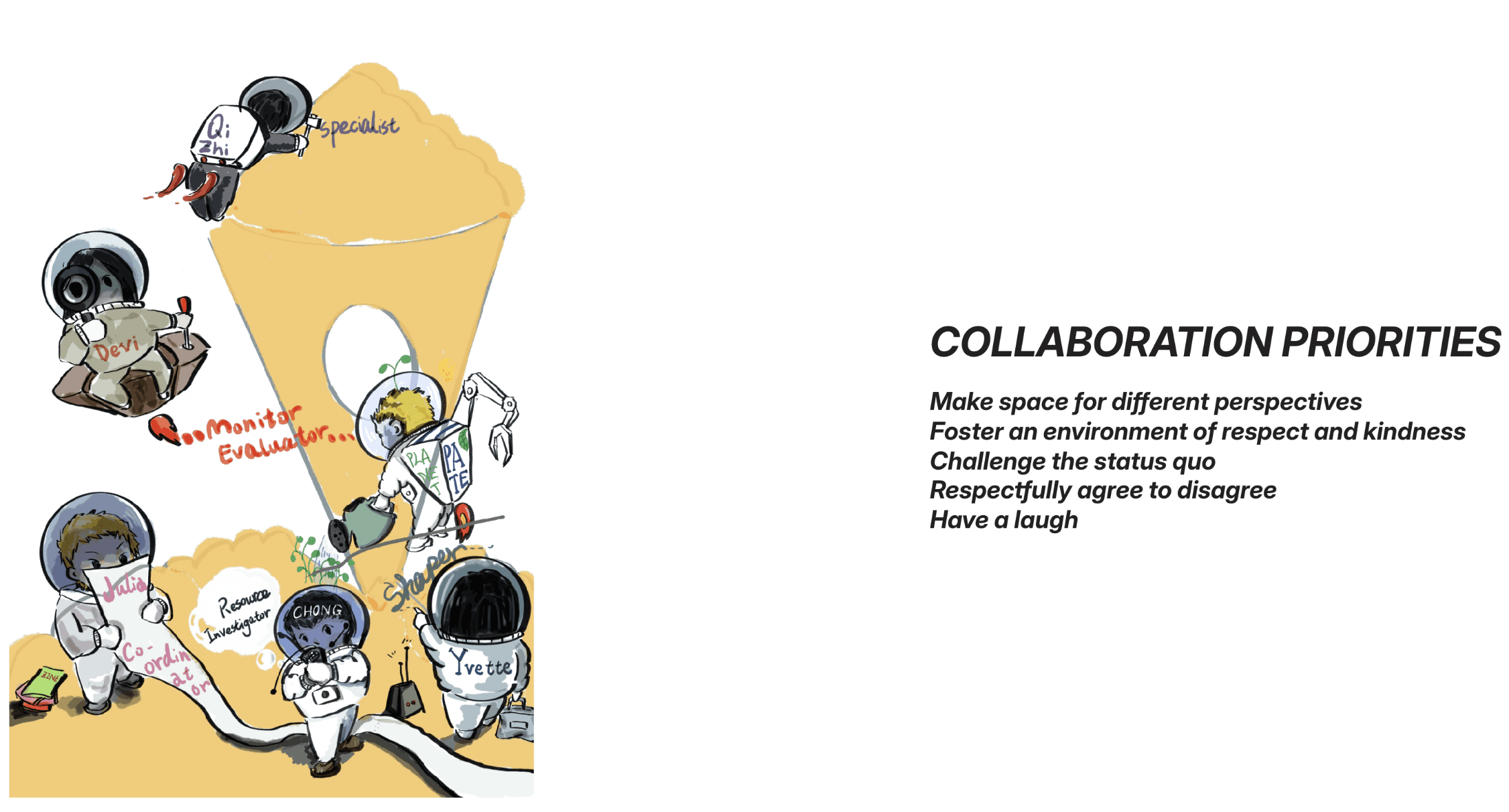
Group of 5
Future of Play 2040
E-Tribe